 As the legal status of recreational and medical use of marijuana changes in the United States, there is a rise of cannabis use disorder. This new Brigham Young University study finds a promising new target to treat this disorder. The research was published yesterday and found in JNeurosci.
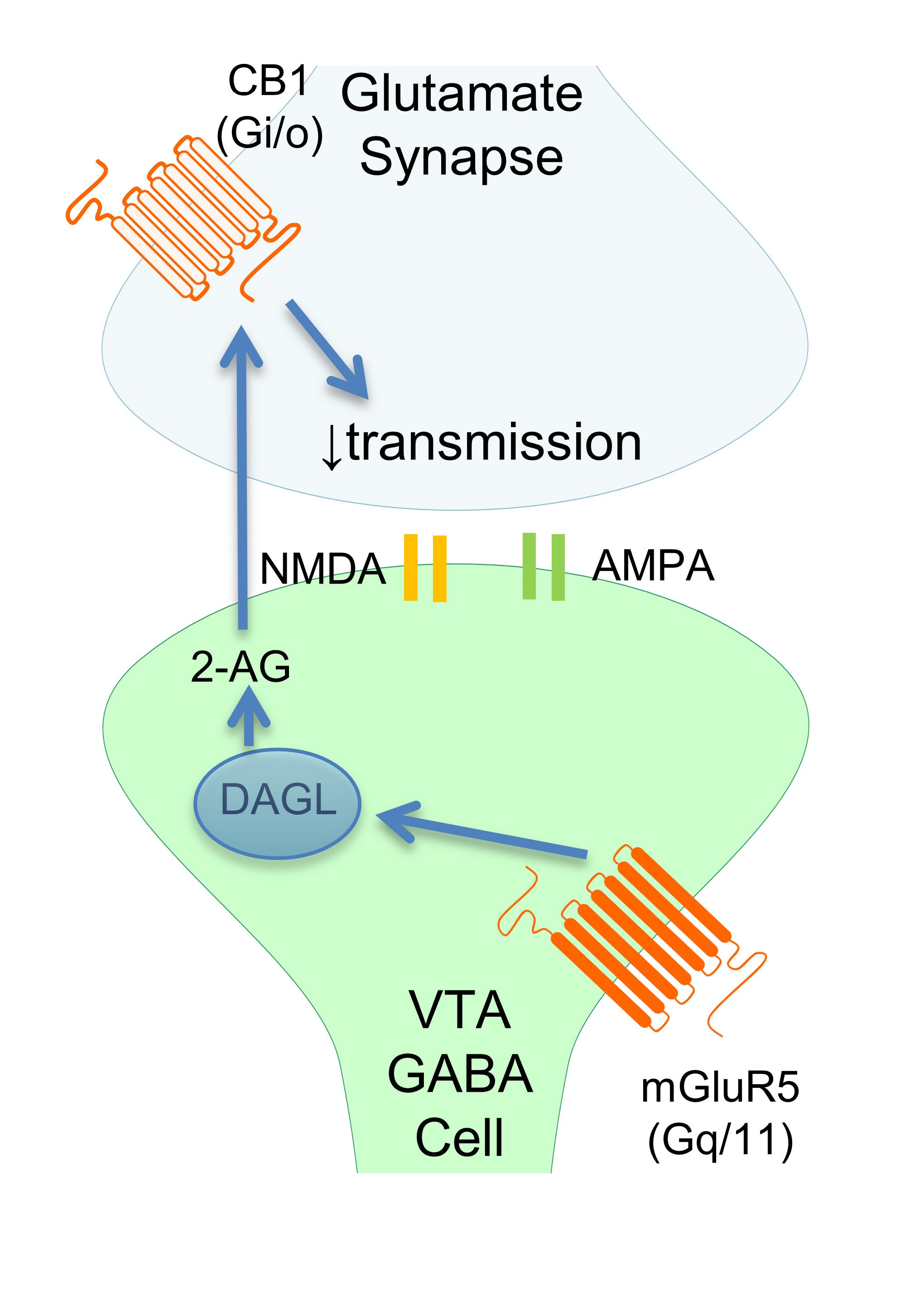
There are cellular-level changes that occur in the ventral tegmental area (VTA) of the brain when chronically exposed to tetrahydrocannabinol (THC), the chemical in marijuana responsible for its effects on cognition and behavior. Using juvenile and adolescent mice, group leader Jeffrey Edwards, Ph.D., and colleagues investigated the effects of THC on VTA GABA cells, an inhibitory cell type in the reward system that regulates dopamine levels.
Their findings showed that after a week of daily THC injections, the recovery synapses on the VTA GABA cells in mice were blocked. This result was not seen when only a single injection was administrated. This finding suggests that persistent THC may alter the inhibitory function of these cells, increasing dopamine levels and the rewarding features of marijuana. The group believes that the GABA neurons might be an ideal target for cannabis use disorder treatments.
Image: This working model shows how chronic exposure to the psychoactive component of marijuana may increase dopamine levels by altering the function of an inhibitory cell type, contributing to the drug's pleasurable and potentially addictive qualities. Image courtesy of Friend et al., JNeurosci (2017).