University of California Riverside researchers have developed a system that they say can detect small changes in the structure of DNA. Using what they described as a "chemical nose," the team says it can "smell" when bits of DNA are folded in unusual ways. Their noninvasive sensing methodology is described in a recent Nature Chemistry paper.
In order to study the impact of DNA folds, their presence must first be detected. To do that, the team modified a concept that has previously been used to sense other things, such as chemical components in different vintages of wine. The chemicals in the system could be designed to look for nearly any kind of target molecule. However, the way the "nose" is typically used, it could not detect DNA, so the team added new components that could help the “nose” sniff out its DNA target.
Search Antibodies Search Now Use our Antibody Search Tool to find the right antibody for your research. Filter
by Type, Application, Reactivity, Host, Clonality, Conjugate/Tag, and Isotype.
"Humans detect smells by inhaling air containing odor molecules that bind to multiple receptors inside the nose," co-author Richard J. Hooley explained. "Our system is comparable because we have multiple receptors able to interact with the DNA folds we're looking for."
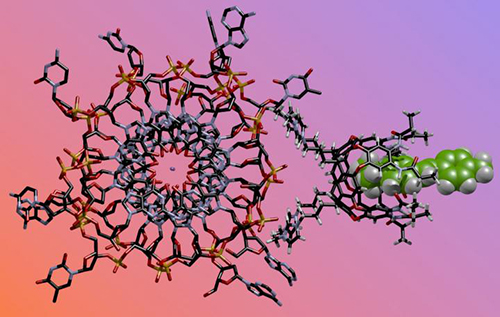
The chemical nose is composed of three parts: host molecules, fluorescent guest molecules, and DNA, which is the target. When the desired folds are present, the guest glows, alerting scientists to their presence in a sample.
To validate the system, the team successfully used it to discriminate between G-quadruplex structures. Most of the time, the four nucleic acids that make up DNA form a double helix structure. Sometimes, however, guanine-rich regions fold in a different manner, creating what's called a G-quadruplex.
Illustration of the chemical "nose" sensing a G-quadruplex structure.