ACE2 (angiotensin-converting enzyme 2), the protein that SARS-CoV-2 uses to enter human cells. The findings, reported on Saturday in Developmental Cell, may explain why smokers appear to be particularly vulnerable to severe infections. The analysis also indicates that the change is reversible, suggesting that quitting smoking might reduce the risk of a severe coronavirus infection.
From the early stages of the current pandemic, scientists and clinicians have noted dramatic differences in how people respond to infection with SARS-CoV-2. Most infected individuals suffer only mild illness, but others require intensive care. Three groups, in particular, have been shown to be significantly more likely than others to develop severe illness: men, the elderly, and smokers.
With most laboratory experiments on hold due to the pandemic, CSHL Fellow Jason Sheltzer and Google engineer Joan Smith turned to previously published data to seek possible explanations for these disparities. They were curious as to whether the vulnerable groups might share some key feature related to the human proteins that the coronavirus relies on for infection.
Coronavirus Research ProductsSearch Now Find the right products for your coronavirus-related research. Biocompare's Coronavirus Research Products category includes commercially available antibodies, ELISA kits, proteins, strains, and PCR assays. “We started gathering all the data we could find,” Sheltzer says, explaining that he and Smith focused first on comparing gene activity in the lungs across different ages, between the sexes, and between smokers and nonsmokers. “When we put it all together and started analyzing it, we saw that both mice that had been exposed to smoke in a laboratory and humans who were current smokers had significant upregulation of ACE2.”
While they found no evidence that age or sex impacts ACE2 levels in the lungs, the influence of smoke exposure was surprisingly strong. The change appears to be temporary, however. The data revealed that the level of ACE2 in the lungs of people who had quit smoking was similar to the level in non-smokers.
Sheltzer, Smith, and colleagues also found that the most prolific producers of ACE2 in the airways are mucus-producing cells called goblet cells. Smoking is known to increase the prevalence of such cells, a change that can protect the airways from irritants, but that—by amplifying the amount of ACE2 in the lungs—may also increase vulnerability to SARS-CoV-2.
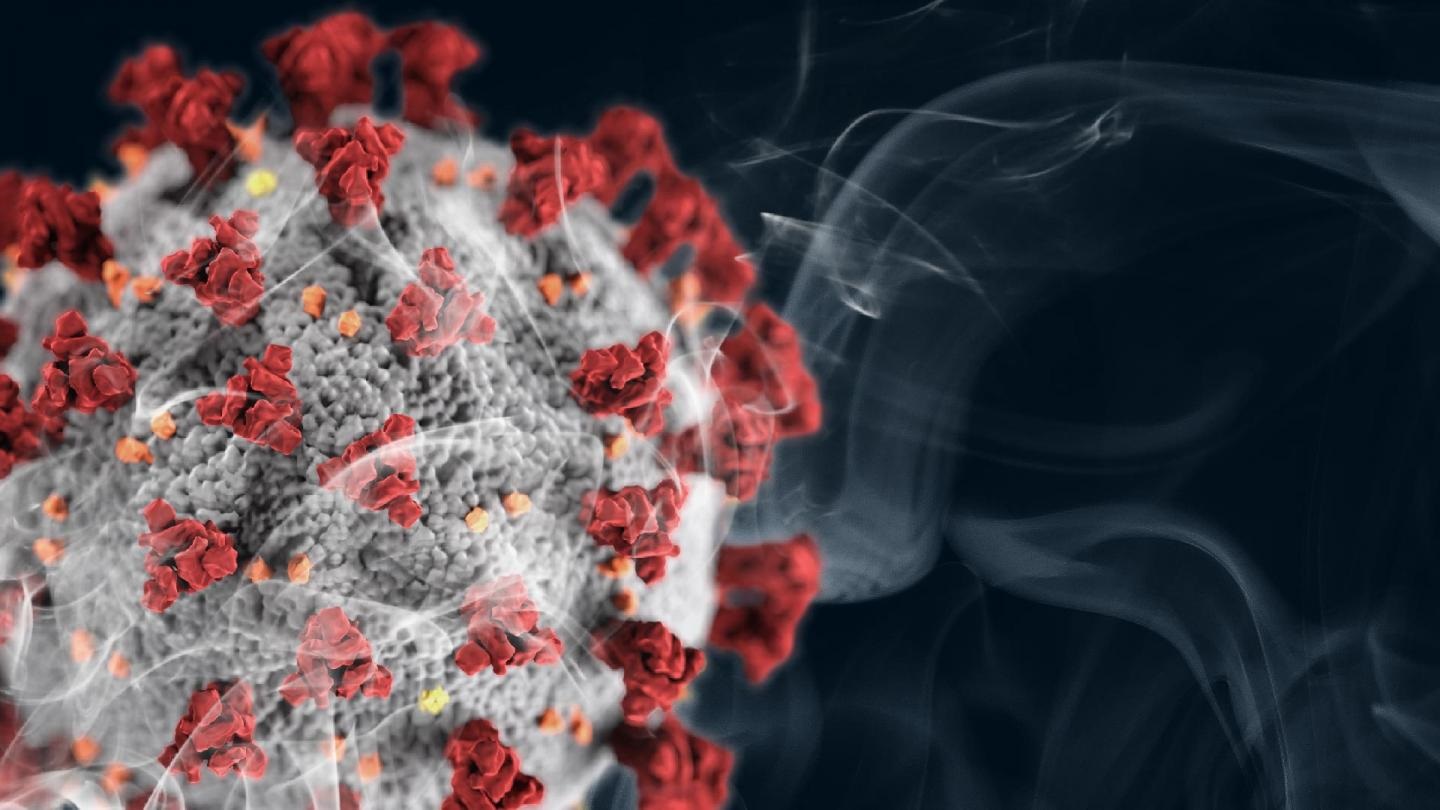
Image: Smoking changes the lungs in ways that make the coronavirus more likely to bind to lung cells. Image courtesy of CSHL.