In a study published today in Nature Communications, University of Leeds scientists have identified a key process that protects bacteria from attack: how they build their outer, defensive wall. The finding introduces a new strategy that could be used in the hunt for antibiotics.
“Our findings are changing the way we think about the way these cells constantly renew and replenish the proteins that make up the outer membrane,” says first author Antonio Calabrese. “Understanding that process of how bacteria build their cell wall in greater detail may identify ways we could intervene and disrupt it. In doing so, we can either destroy the bacteria altogether or reduce the rate at which they divide and grow, making bacterial infections less severe.”
Search Antibodies Search Now Use our Antibody Search Tool to find the right antibody for your research. Filter
by Type, Application, Reactivity, Host, Clonality, Conjugate/Tag, and Isotype.
For their study, the researchers focused on the role of a protein called SurA. SurA is a chaperone whose job is to martial other proteins from where they are made (at the center of the cell) to where they are needed—in this case, to bolster the bacterium’s outer wall. Without the chaperone SurA, the essential proteins needed to build the cell wall would run the risk of losing their structural integrity on their journey to the outer membrane.
Using advanced analytical techniques, the scientists mapped how the chaperone SurA recognizes proteins to transport them to the bacterial outer membrane. “For the first time, we have been able to see the mechanism by which the chaperone SurA helps to transport proteins to the bacterial outer membrane,” Calabrese says. “In effect, it does this by cradling the proteins to ensure their safe passage. Without SurA, the delivery pipeline is broken and the wall cannot be built correctly.”
Senior author Sheena Radford adds, “This is an exciting discovery in our quest to find weak spots in a bacteria’s armory that we can target to stop bacterial growth in its tracks and build much-needed new antibiotics. It’s early days, but we now know how SurA works and how it binds its protein clients. The next step will be to develop molecules that interrupt this process, which can be used to destroy pathogenic bacteria.”
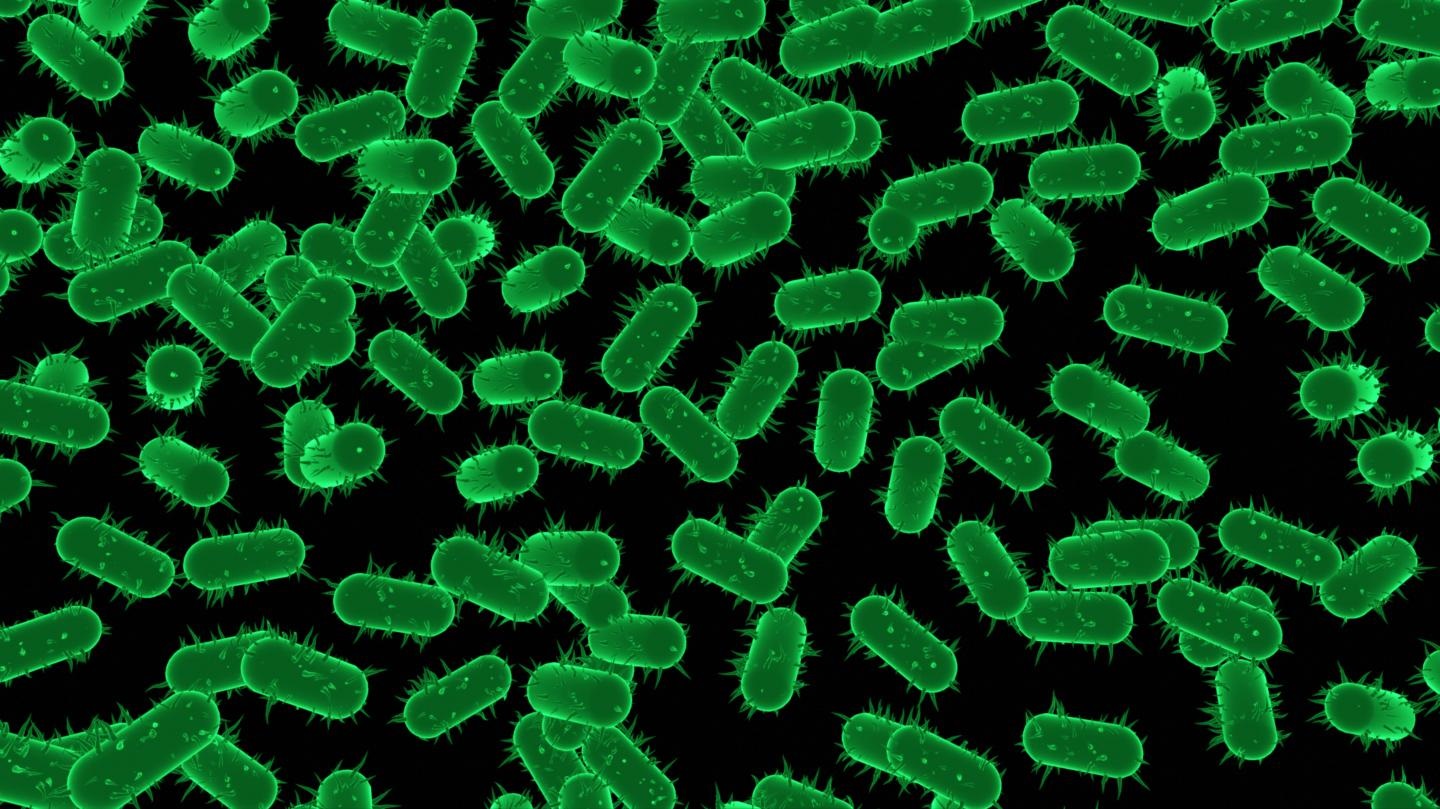
Image: Graphical representation of E. coli. Image courtesy of University of Leeds.