New research from Kyoto University reveals that microhomology-mediated end joining, natural repair system for DNA damage, is probably far more common in humans than originally assumed. Using a novel bioinformatics technique called MHcut and commercial genome-editing technology, the scientists created mutations in iPS cells with extraordinary precision to model diseases without needing patient samples. This method, published Thursday in Nature Communications, will make it much easier to study diseases even when patients are rare or unavailable.
The two most commonly studied systems of DNA repair are non-homologous end joining and homology-directed repair. But the study scientists have been studying a third, less appreciated repair system to develop new gene-editing technologies. The technique, called microhomology-mediated end joining (MMEJ), repairs double-stranded breaks that are flanked by short identical sequences called microhomologies.
“Its importance in DNA repair in the laboratory setting has been known for some time, but only through this work have we come to appreciate the extent of its relationship with deletion variants in the human population,” says senior author Knut Woltjen.
Search Antibodies Search Now Use our Antibody Search Tool to find the right antibody for your research. Filter
by Type, Application, Reactivity, Host, Clonality, Conjugate/Tag, and Isotype.
Indeed, using MHcut, the team discovered that 57% of all deletion mutations in the human genome are flanked by microhomologous sequences that are at least three base pairs long, a percentage much larger than expected by chance alone.
“Less than 0.1% have been connected to a disease. The other 99.9% nobody has identified their impact yet,” says first author Janin Grajcarek.
Popular gene-editing technologies like CRISPR/Cas9 operate by exploiting natural DNA repair systems such as non-homologous end joining, homology-directed repair, and MMEJ. Woltjen’s team has shown in earlier work that MMEJ offers higher precision than these other systems. Now with MHcut, the new study shows scientists how to identify deletion mutations in the human genome that can be recreated with MMEJ in the laboratory.
To demonstrate this point, the lab modified three disease-associated genes in human iPS cells: DYSF, which regulates muscle repair, and ALAS2 and FECH, which encode enzymes for heme synthesis. After manufacturing the mutations, the Woltjen group joined efforts with CiRA colleagues who are experts in generating muscle cells (for the DYSF mutation) and red blood cells (for the ALAS2 and FECH mutations) from iPS cells. The edited cells showed characteristics consistent with the disease in patients.
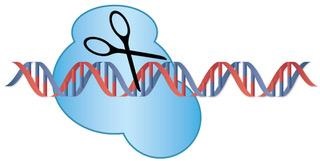
Image: Using MHcut and commercial genome-editing technology, researchers can create mutations in iPS cells with extraordinary precision to model diseases without the need of patient samples. Image courtesy of Kyoto University/Woltjen lab.