Using single-nucleus (sn)ATAC-seq profiling, Salk Institute researchers have profiled each cell during normal breast development in order to understand what goes wrong in cancer. The team's findings, published today in Cell Reports, advance the understanding of normal breast development and may lead to new strategies for tackling tumors.
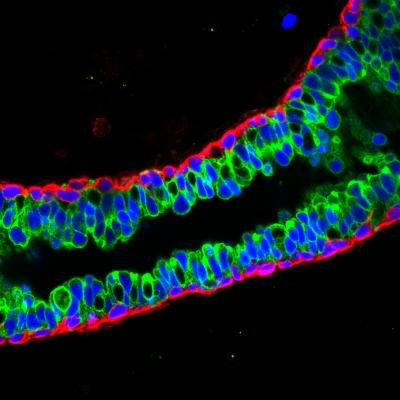
Mature breast tissue contains two main cell types, which are often involved in breast cancers: luminal cells and basal cells. Luminal cells line the ducts and produce milk, while surrounding basal cells contract to push the milk out of the ducts. The scientists were interested in what drives the molecular changes that govern how, during development, stem cells become specialized into these types of cells. In particular, they studied how chromatin changes to allow certain genes to become accessible or inaccessible to affect gene expression and the development of these cells.
To do this, the researchers compared mouse breast tissue in adult and late prenatal development. They used single-nucleus (sn)ATAC-seq profiling to separate the young cells into groups with basal-like and luminal-like features, based on chromatin accessibility. Surprisingly, the team found that each cell was already poised to become either a basal cell or luminal cell right before birth. This suggests that the cells quickly gain the ability to convert into each cell type soon after birth with appropriate changes in chromatin accessibility and molecular cues providing the instructions. The abnormal alteration of these processes can lead to tumor development later on. The team continued to analyze a multitude of features of each developing cell using bioinformatics and advanced machine learning to reveal a complex picture of breast development and maturation.
Search Antibodies Search Now Use our Antibody Search Tool to find the right antibody for your research. Filter
by Type, Application, Reactivity, Host, Clonality, Conjugate/Tag, and Isotype.
 The Salk scientists integrated their findings into a free online database in the hopes of aiding studies of cell growth, gene regulation, and other factors across multiple cell types and developmental states. The authors believe the database, which allows for comparison between chromatin accessibility and gene expression during normal breast development, among other components, could be used to develop new theories of how breast cells go astray and turn into cancer.
Image: These are luminal cells (green) and basal cells (red) in mature mouse breast tissue. Image courtesy of Salk Institute.