Scientists have developed a technique that uses light to activate a cancer-killing compound that attacks a vital energy source in cancer cells—even under hypoxia. The technique, detailed in a paper published today in Nature Chemistry, could lead to a new tool for clinicians to use in the fight against cancer, and could potentially vaccinate patients against future cancers.
Photodynamic therapy uses light to kill cancer tumors in the body by activating a chemical compound called a photosensitizer. Using this method, clinicians can direct the light to specific regions of the cancer tumor and spare normal tissue from damage. However, current methods mainly rely on the presence of oxygen, and many tumors are hypoxic.
In the new study, researchers developed a compound of the metal iridium that will kill cancer cells in culture even when oxygen concentration is low. The technique can treat any tumors where light can be administered, and would be particularly suited to treat bladder, lung, esophageal, brain, and skin cancers.
Search Antibodies Search Now Use our Antibody Search Tool to find the right antibody for your research. Filter
by Type, Application, Reactivity, Host, Clonality, Conjugate/Tag, and Isotype.
“There is an increasing interest in reducing the side effects of cancer treatment as much as possible, and anything that can be selective in what it targets will help with that,” says senior author Peter Sadler of the University of Warwick. “The compound that we have developed would not be very toxic at all. We would give it to the cancer cells, allow a little time for it to be taken up, and then we would irradiate it with light and activate it in those cells. We would expect killing of those cancer cells to occur very quickly compared with current methods.”
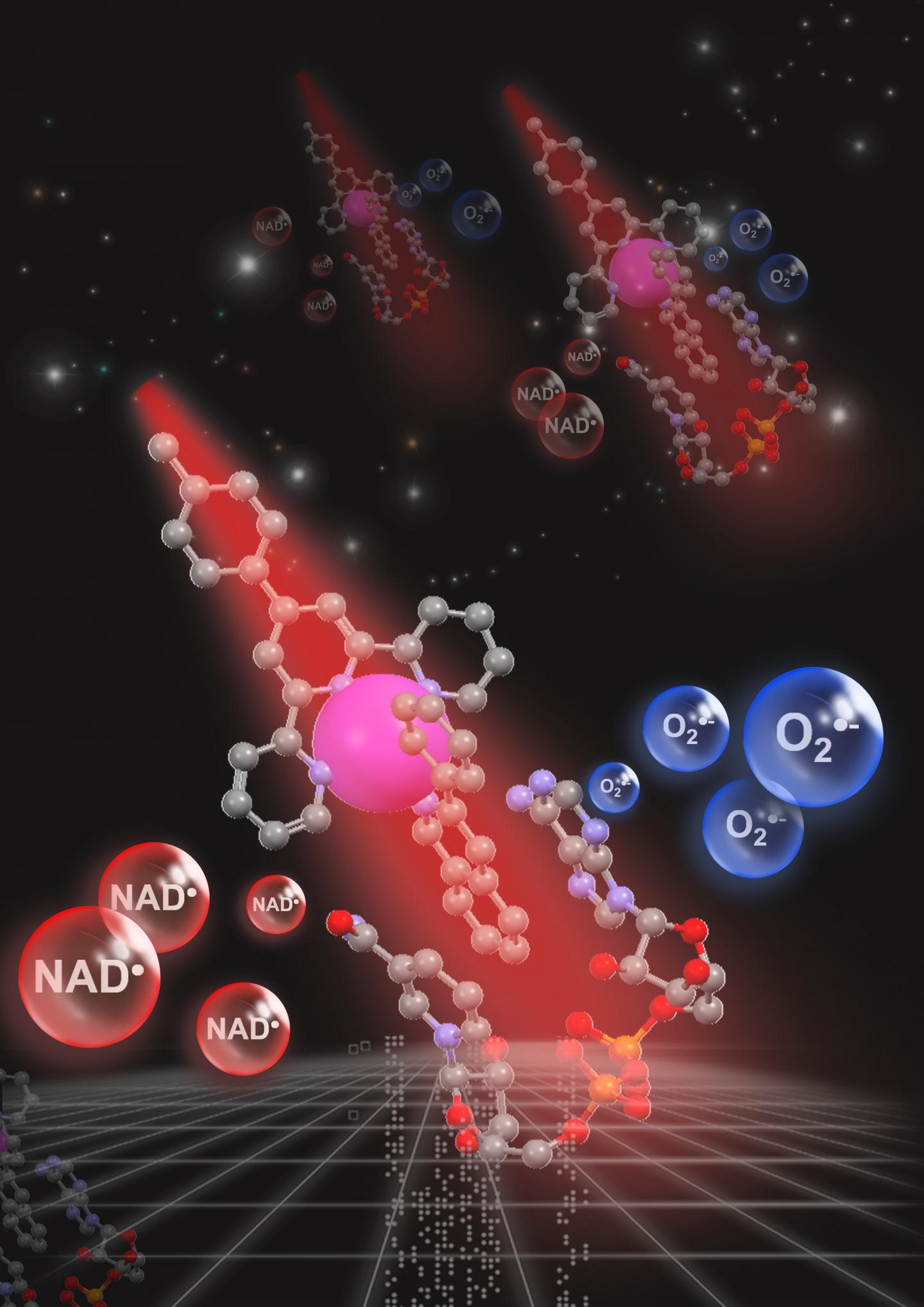
Once light-activated, the iridium compound attacks the energy producing-machinery in the cancer cells—a vital coenzyme called NADH—and catalytically destroys that coenzyme or changes it into its oxidized form. This upsets the energy-producing machinery in a cancer cell and effectively cuts off the tumor’s power source.
The team also noted that as the cancer cells die, they change their chemistry in such a way that they will generate an immune reaction in the body in what is known as an immunotherapeutic response. This suggests that those treated by this technique might be immunized against future attack by that cancer.
Image: Visible light can activate an iridium (large purple ball) catalyst which has a special coating (gray balls) which homes in on coenzyme NADH (red/gray/purple balls at bottom) in cancer cells and removes an electron from it, so destroying them by cutting off a vital energy source and generating a toxic form of oxygen (in the blue bubble). Image courtesy of Huaiyi Huang at Sun Yat-Sen University.