Researchers have invented a device that can manipulate neural circuits with a tiny brain implant controlled by a smartphone. Using Lego-like replaceable drug cartridges and powerful Bluetooth low-energy, the device can target specific neurons of interest using drug and light for prolonged periods, providing a new method to study brain disease like Parkinson’s, Alzheimer’s addiction, depression, and pain. The paper was published today in Nature Biomedical Engineering.
“The wireless neural device enables chronic chemical and optical neuromodulation that has never been achieved before,” says lead author Raza Qazi from the Korea Advanced Institute of Science and Technology (KAIST) and University of Colorado, Boulder.
Qazi says that this technology significantly overshadows conventional methods used by neuroscientists to deliver drugs and light, which usually involve rigid metal tubes and optical fibers. Apart from limiting the subject’s movement, these methods cause lesions in soft brain tissue over time, making them unsuitable for long-term implantation. Previous solutions to these problems have been limited by their inability to deliver drugs for long periods of time and by their bulky and complex control setups.
Search Antibodies Search Now Use our Antibody Search Tool to find the right antibody for your research. Filter
by Type, Application, Reactivity, Host, Clonality, Conjugate/Tag, and Isotype.
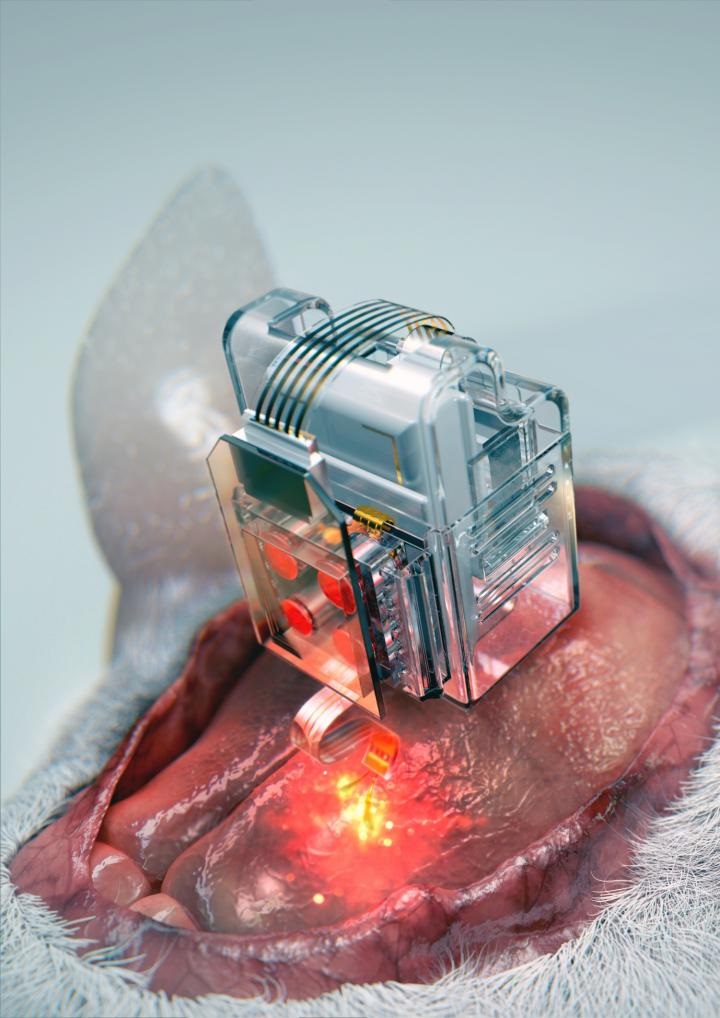
To achieve chronic wireless drug delivery, the researchers invented a neural device with a replaceable drug cartridge, allowing neuroscientists to study the same brain circuits for months without worrying about drug depletion. These ‘plug-n-play’ drug cartridges were assembled into a brain implant for mice with a soft and ultrathin probe that consisted of microfluidic channels and microscopic LEDs for unlimited drug doses and light delivery.
Because the device is controlled by smartphone, neuroscientists can easily trigger any combination of light and drug deliveries in any target animal without being physically inside the laboratory. Using these wireless neural devices, researchers could also easily set up fully automated animal studies where behavior of one animal could positively or negatively affect behavior in other animals by conditional triggering of light or drug delivery.
“We are interested in further developing this technology to make a brain implant for clinical applications,” says senior author Jae-Woong Jeong of KAIST.
Michael Bruchas of the University of Washington adds that this technology will also help improve studies of behavior at the level of neural circuitry and neuromodulators. He says it could also help further the development of therapeutics.
Image: The device, using Lego-like replaceable drug cartridges and powerful Bluetooth low-energy, can target specific neurons of interest using drug and light for prolonged periods. Image courtesy of Korea Advanced Institute of Science and Technology.