Princeton University researchers have developed a new, scalable cell culture system that allows for detailed investigation of how host cells respond to infection with hepatitis B (HBV) and delta virus (HDV). Their findings were published yesterday in Hepatology.
HBV causes an acute illness that is usually rapidly cleared, but young children and people with HIV are at particular risk of chronic HBV infection, which can lead to cirrhosis, liver cancer, and infection with HDV. An effective vaccine exists for HBV, but the expense and limited availability of the vaccine leaves millions at risk for infection worldwide.
Recently, the researchers demonstrated that freshly isolated human hepatocytes can be grown together with non-parenchymal cells on a supporting surface made of collagen. In this cell culture system, which the researchers call a self-assembling co-culture of primary human hepatocytes (SACC-PHH), the hepatocytes retain their differentiated state and can support chronic HBV infection for up to 40 days.
Search Antibodies Search Now Use our Antibody Search Tool to find the right antibody for your research. Filter
by Type, Application, Reactivity, Host, Clonality, Conjugate/Tag, and Isotype.
“Attempts have been made since the mid-1980s to establish robust—and, importantly, persistent—infection in primary human hepatocytes (PHHs) with limited success,” says senior author Alexander Ploss.
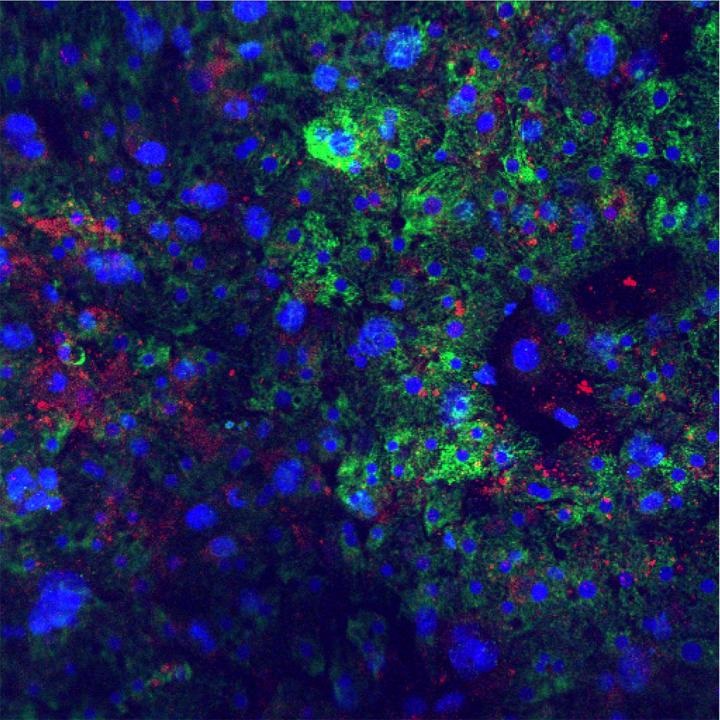
In the new study, the team investigated how hepatocytes respond to infection with HBV and HDV. First, they tested whether SACC-PHH can support infection with both viruses. HBV hijacks the cell’s protein-making machinery to make viral proteins, and HDV co-opts HBV proteins to assemble itself. Therefore, HDV can only reproduce when it infects cells at the same time as HBV (co-infection) or in cells already chronically infected with HBV (super-infection). The researchers found that both of these scenarios can occur in SACC-PHH, even when the culture system has been scaled down to tiny 384 microwell culture plates—a development that makes the system well suited for high-throughput screening of candidate drugs. Accordingly, the team showed that prophylactic treatment with two candidate antivirals, entecavir and Myrcludex B, could reduce levels of both hepatitis viruses in SACC-PHH.
The team also used RNA-Seq to look into gene expression changes during viral infection as well as the immune signaling pathways activated by the viruses.
“We believe that our optimized, high-throughput SACC-PHH platform is a unique resource for investigating hepatotropic pathogens, and that our data will help advance understanding persistent infections by HBV and HDV,” Ploss says.
Image: Long-term co-infection of liver cells (hepatocytes) with HBV and HDV can be established in a highly scalable cell culture system. Image shown is of the cell culture 28 days after HBV/HDV co-infection, with hepatocyte nuclei in blue, a Hepatitis B viral protein in red, and HDV genomic RNA in green. Image courtesy of Winer, et al., Princeton University.