Dead cells disrupt immune responses and undermine defense against infection, according to recently published research. Scientists at the University of Sheffield report that cells that are programmed to die can disrupt the normal function of macrophages. This can impact how well they respond to wounds and patrol the body to seek out infection.
The findings, published last week in PLOS Biology, show that immune cells prioritize the clearance of dead cells, which overrides their normal migration to sites of injury, impairing immune responses.
"Billions of cells die within our bodies on a daily basis and many of these are removed and digested by our immune cells, Dr. Iwan Evans, co-author of the paper explains. "If this removal process goes wrong it can lead to damaging autoimmune conditions. Excessive or inappropriate immune responses worsen or cause a very broad range of human diseases from cancer to neurodegeneration.
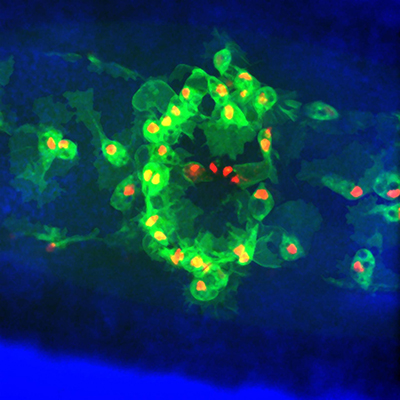
The research to investigate the interactions between dying cells and immune cells was conducted using fruit flies, which contain macrophage-like cells highly similar to our own immune cells. The new study also uncovered a novel role for a protein called Six-Microns-Under (or Simu) in keeping immune cells at sites of injury. Without this protein the macrophages left wound sites precociously.
Image: Macrophages at wound. Image courtesy of Dr Iwan Evans, University of Sheffield