Blood vessels play a vital role in delivering nutrients and eliminating waste. So when organs or tissues are damaged, the only way for them to resume their normal function is for new blood vessels to form again. This process is called angiogenesis.
At present, angiogenesis can be triggered by the injection of growth factors or genetic material into the tissue site of interest. However, a study published in the journal Advanced Materials shows that stable angiogenesis can be achieved by simple hydrogel injection. Due to its mechanical properties, this hydrogel resembles a blood clot.
Search Antibodies Search Now Use our Antibody Search Tool to find the right antibody for your research. Filter
by Type, Application, Reactivity, Host, Clonality, Conjugate/Tag, and Isotype.
In order for angiogenesis to occur smoothly, the cells that organize into blood vessels need support from other cells for stability and blood flow regulation. The research team discovered a new population of cells of the immune system that circulate in the blood—CD11b+ monocytes that produce the protein piezo-1. Piezo-1 is one of the so-called mechanoreceptors that are necessary for the interaction of cells in the central nervous system.
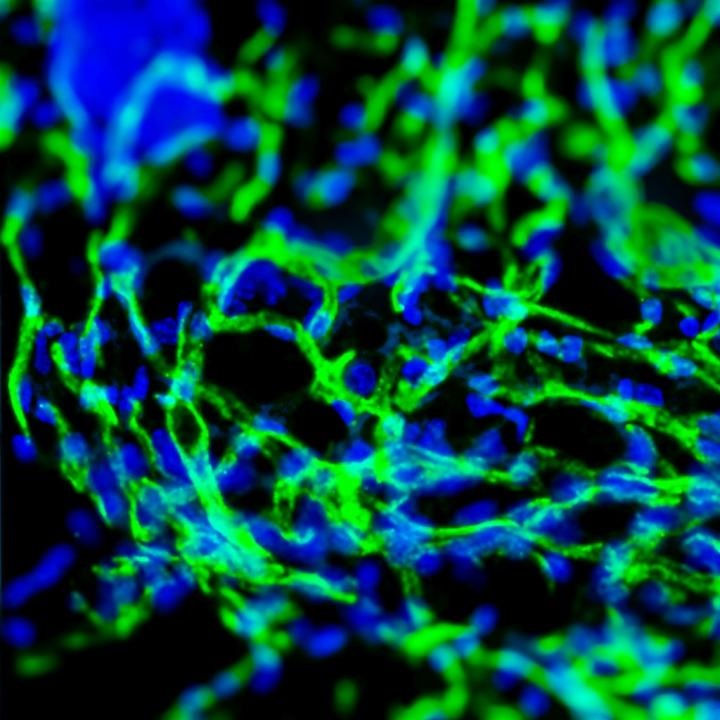
The scientists were also able to clarify the role of the cell population of CD11b+ monocytes in the stabilization of newly formed blood vessels. On the basis of these results, they have developed a hydrogel that, due to its mechanical properties, is able to stimulate the CD11b+ monocytes to form piezo-1 so that new blood vessels develop at the desired site.
“Our study represents a paradigm shift,” says senior author Prasad Shastri of the University of Freiburg, “as it shows for the first time that a mechanically defined microenvironment is capable of recruiting a specific population of mechanosensing cells that can aid in a regenerative process.”
Image: A hydrogel injection affects the growth of new blood vessels. Image courtesy of AG Shastri.