Human and animal skin is densely populated by fungi. One genus of fungi called Malassezia forms part of the microflora of healthy skin, and it is suspected to strengthen the body’s defenses and prepare the immune system for dangerous pathogens. However, little is known about the physiological processes that keep this ubiquitous fungus in check.
Immunologists at the University of Zurich have now shown that our immune system is responsible for maintaining the balance on our skin. The researchers were able to demonstrate that, in mice as well as in humans, Malassezia fungi stimulate the immune system to produce the cytokine interleukin-17. Their research was published last week in Cell Host & Microbe.
“If this cytokine isn’t released or if the immune cells that produce interleukin-17 are missing, there is nothing to stop the fungus from growing and infesting the skin,” says senior author Salomé LeibundGut-Landmann.
Search Antibodies Search Now Use our Antibody Search Tool to find the right antibody for your research. Filter
by Type, Application, Reactivity, Host, Clonality, Conjugate/Tag, and Isotype.
But what happens when the balance between the fungus and the immune system on the skin is lost? There is some evidence that the usually harmless Malassezia fungus plays a role in a condition called atopic dermatitis. This chronic inflammatory skin allergy causes the immune system to overreact to antigens from the environment—for example, house dust mites. This can lead to eczema, which is characterized by dry, inflamed, and itching skin lesions, typically on the neck, forearms, and legs. It affects up to 20% of children and 10% of adults and is one of the most common skin diseases in dogs.
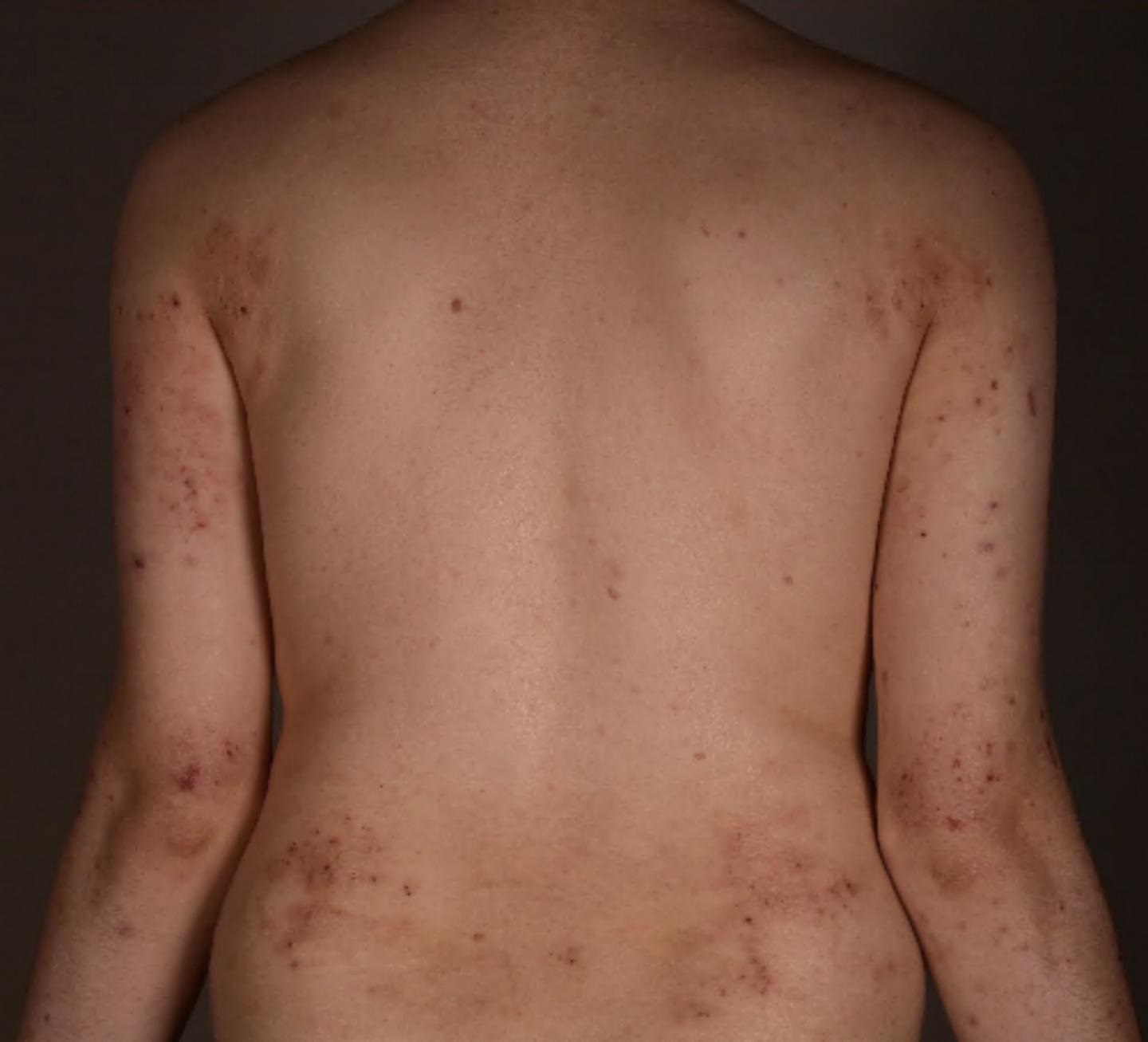
The current study confirms that interleukin-17 production—which normally provides protection against uncontrolled fungal growth on the skin—also contributes to the development of symptoms characteristic of atopic dermatitis. The fungus acts as an allergen on the skin and triggers an overreaction of the immune system with the respective inflammatory characteristics.
“The findings of our study suggest that therapeutic antibodies that neutralize the effect of interleukin-17 could be an effective treatment for atopic dermatitis. These antibodies already exist and are being used to treat psoriasis with great success,” says LeibundGut-Landmann.
However, it remains to be studied why the immune response against the Malassezia fungus can become pathological and why the normally protective mechanisms break down in atopic dermatitis patients.
Image: Back with atopic dermatitis. Image courtesy of Dermatologische Klinik, USZ.