Scientists have long known that the protein p53, when mutated, is a critical factor in the onset of many different kinds of cancer. In its unmutated form, however, it is known to protect against cancer. These dueling qualities make the p53 protein and the gene that makes it among the most studied in biology, yet the molecular mechanisms that govern its stability and function have yet to be fully understood.
Ateam led by University of Wisconsin-Madison cancer researchers Richard A. Anderson and Vincent Cryns just reported the discovery of an unexpected regulator of the critical protein, opening the door to the development of drugs that could target it. Their study was published in Nature Cell Biology today.
Typically, explains Anderson, the p53 protein serves as "the guardian of the genome," initiating the repair of DNA damaged by ultraviolet radiation, chemicals or other means and preventing tumor growth. When mutated, however, the protein goes rogue, becoming more stable and abundant than its unmutated counterpart, accumulating in the nucleus of the cell and causing cancer.
Search Antibodies Search Now Use our Antibody Search Tool to find the right antibody for your research. Filter
by Type, Application, Reactivity, Host, Clonality, Conjugate/Tag, and Isotype.
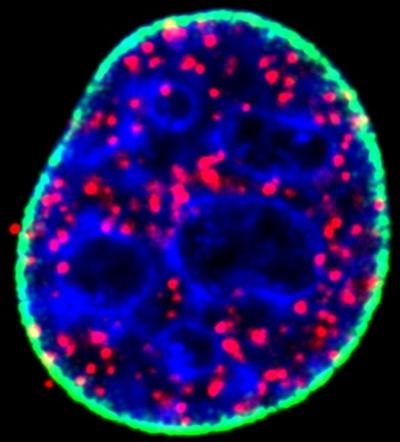
The research team says it found a new mechanism that drives this stability. The culprit: an enzyme called PIPK1-alpha and its lipid messenger, known as PIP2, which seem to behave as master regulators of p53. According to the team, when a cell is stressed, whether by DNA damage or other means, the enzyme associates with p53 and produces PIP2, which binds strongly to it and promotes interaction between p53 and molecules known as small heat shock proteins. This stabilizes the protein complex, setting the stage for cancer, including aggressive cancers such as triple negative breast cancer.
"Small heat shock proteins are really good at stabilizing proteins," says Cryns. "In our case, their binding to mutant p53 likely facilitates its cancer-promoting actions, something we are actively exploring."
In the new study, the researchers also showed that when the PIP2 enzyme pathway is disrupted, mutant p53 does not accumulate and cause damage. "If you can eliminate mutant p53, you might be able to eliminate cancers driven by p53," adds Anderson.
Image: The molecular pathway for the protein p53, commonly associated with many cancers, is illuminated in this micrograph. The p53-PIP2 complex is shown in red, DNA in blue, and the cell nucleus membrane in green. Unraveling the p53-PIP2 pathway may lead to new therapies. Image courtesy of Richard A. Anderson/UW-Madison.