Discarding information from the brain is associated with more mental effort than keeping it, finds a human neuroimaging study published today in JNeurosci. These results suggest that focusing attention on the memory of an unwanted experience may be required to forget it.
Although the human brain automatically remembers and forgets information, these processes can also be controlled voluntarily. Previous research has linked intentional forgetting with redirecting one’s attention away from the unwanted experience during memory formation and suppressing its retrieval once the memory has been formed.
Search Antibodies Search Now Use our Antibody Search Tool to find the right antibody for your research. Filter
by Type, Application, Reactivity, Host, Clonality, Conjugate/Tag, and Isotype.
In the current study, first author Tracy Wang of the University of Texas at Austin and colleagues instructed healthy young adults to remember or forget images of scenes and neutral faces. An analysis of functional magnetic resonance imaging data revealed that forgotten images were associated with stronger activation of the visual cortex than remembered images. Not too strong, however—forgetting was most successful when this brain region was activated at moderate levels.
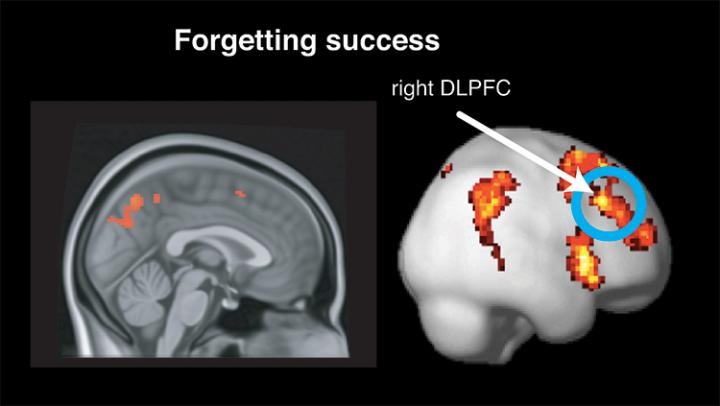
The new research provides evidence for a forgetting strategy that involves activation, rather than suppression, of unwanted information. This provides a new link between the voluntary control of visual attention and the long-term fate of memories.
Image: GLM results for forgetting success (greater activity for successful intentional forgetting relative to successful intentional remembering). Image courtesy of Wang et al., JNeurosci (2019).