Autophagy is an important biological recycling mechanism that is used to maintain homeostasis within all types of animal tissue. Many studies have attempted to understand the relationship between the reduction of autophagy and progression of aging in animals; however, until now, none have provided a clear explanation.
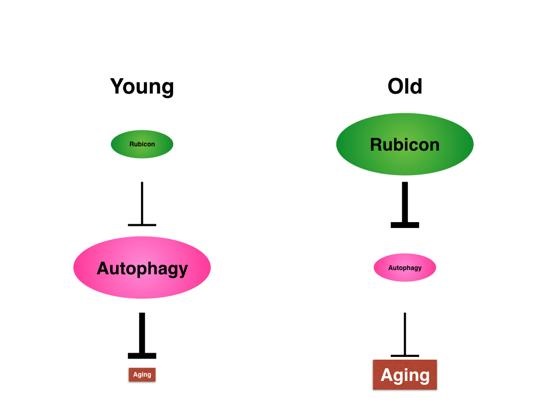
In 2009, a research team led by Tamotsu Yoshimori at Osaka University identified Rubicon as a protein factor that suppresses autophagy by controlling a specific step in this pathway. This time, the team found that Rubicon expression levels increased in an age-related manner in worm, fly, and mouse tissues. Their findings were published today in Nature Communications.
Autophagy allows degradation of damaged cellular components and helps to prevent the onset of a variety of diseases related to cellular stress and dysfunction, including cancer, neurodegenerative diseases, and metabolic syndromes. Reduced autophagy has recently been linked to the progression of aging in animals. While a variety of methods can increase autophagy in aged animals, thereby slowing the aging process, there has been no definite finding regarding the underlying cause of naturally reduced autophagy.
Search Antibodies Search Now Use our Antibody Search Tool to find the right antibody for your research. Filter
by Type, Application, Reactivity, Host, Clonality, Conjugate/Tag, and Isotype.
“Rubicon has been linked to inhibition of the autophagic process, and knockout of Rubicon in mice helped to mitigate autophagy-related liver diseases,” says Yoshimori. “Therefore, we suspected that Rubicon may directly affect aging through its interaction with autophagy.”
In the study, increased levels of Rubicon were found in tissues from multiple aged model organisms (worms, flies, and mice). When the researchers suppressed Rubicon expression, all model organisms demonstrated increased autophagy activity, which led to improvement of multiple age-related factors, and a slightly increased lifespan in worms and flies.
“Our analyses revealed that Rubicon suppression in model organisms led to reduction of age-associated motor decline, as well as reduction of fibrosis,” says lead author Shuhei Nakamura. “Importantly, we found that Rubicon suppression enabled aged mice to resist attempts to induce Parkinson’s disease.”
The findings in this study suggest that, because elevated levels of Rubicon lead to reduced autophagy in aged animals, suppression of Rubicon may be critical in extending healthy lifespan in humans.
Image: Age-dependent increase in expression of Rubicon, a negative regulator of autophagy, is a cause of age-dependent autophagic impairment and contributes to the acceleration of aging in animals. Image courtesy of Osaka University.