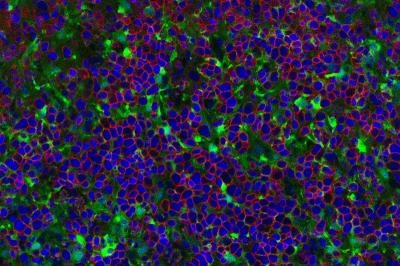
A study published yesterday in Cell Stem Cell presents a technique to convert pluripotent stem cells into mature T cells capable of killing tumor cells. The technique uses structures called artificial thymic organoids, which work by mimicking the environment of the thymus, the organ in which T cells develop.
T cell therapies have shown great promise for treating certain types of cancer. The current approach involves collecting T cells from a patient, genetically engineering the cells, and infusing them back into the patient. But engineered T cells do not always function well, the treatment is expensive, and patients can’t always supply enough T cells for therapy.
“What’s exciting is the fact that we start with pluripotent stem cells,” says senior author Gay M. Crooks of UCLA. “My hope for the future of this technique is that we can combine it with the use of gene editing tools to create ‘off-the-shelf’ T cell therapies that are more readily available for patients.”
Search Antibodies Search Now Use our Antibody Search Tool to find the right antibody for your research. Filter
by Type, Application, Reactivity, Host, Clonality, Conjugate/Tag, and Isotype.
The researchers also showed that they could genetically engineer pluripotent stem cells to express a cancer-targeting T cell receptor and, using artificial thymic organoids, generate T cells capable of targeting and killing tumor cells in mice.
“Once we create genetically edited pluripotent stem cell lines that can produce tumor-specific T cells in artificial thymic organoids, we can expand those stem cell lines indefinitely,” says co–first author Amélie Montel-Hagen.
One of the remaining challenges for the UCLA scientists is that the T cells created using the artificial thymic organoids have additional molecules on their surface that are not matched to each individual patient. Those extra molecules could cause a patient’s body to reject the transplanted cells.
“Our next step will be to create T cells that have the receptors to fight cancer but do not have the molecules that cause the rejection of the cells, which would be a major step toward the development of universal T cell therapies,” says co–first author Christopher Seet.
Image: A section of an artificial thymic organoid showing T cells (outlined in red) created from human embryonic stem cells. Image courtesy of UCLA Broad Stem Cell Research Center/Cell Stem Cell.