The reason that oil and vinegar separate in salad dressing is because of a process called liquid–liquid phase separation that is also seen in nature. The tumor suppressor gene SPOP, the most frequently mutated gene in prostate cancer, encodes a protein that is part of the cell's protein-recycling machinery. SPOP binds unneeded or unwanted proteins so that they can be chemically tagged for destruction. Mutations in SPOP disrupt binding, leading to a buildup of cancer-promoting proteins in sensitive cells. However, a study published today in Molecular Cell shows that mutations in SPOP also contribute to cancer by disrupting liquid–liquid phase separation.
Cells rely on liquid–liquid phase separation to maintain their equilibrium under changing conditions. Evidence suggests that the process works by sequestering molecules into borderless compartments called membraneless organelles that are found throughout the cell.
Tanja Mittag, Ph.D., of the St. Jude Department of Structural Biology, and her colleagues were studying SPOP initially to better understand its role in protein degradation. What they found is that SPOP is multivalent: It can recognize and bind molecules with multiple binding sites rather than just one, like the cancer-promoting proteins DAXX and androgen receptor that were used in this study.
Mittag’s team showed that when DAXX and SPOP were expressed together in cells in a laboratory dish, DAXX could trigger liquid–liquid phase separation with SPOP. This caused SPOP and DAXX to move from their locations in separate membraneless organelles in the nucleus to form their own borderless compartment. Inside the newly formed membraneless organelle, enzymatic activity occurred, indicating that SPOP was tagging DAXX for destruction.
"The big question for the field has been what is going on inside these compartments," says co-first author Joel Otero, Ph.D., of the St. Jude Structural Biology department. "This research showed the membraneless organelles are actually promoting a reaction by bringing together SPOP and its substrate, in this case DAXX, so the reaction can take place."
First author Jill Bouchard, Ph.D., a St. Jude postdoctoral fellow, explained that without phase separation, the process for maintaining protein balance is disrupted. That allows substrate levels, in this case DAXX levels, to increase with potentially catastrophic results.
Liquid–liquid phase separation did not occur when DAXX was expressed with mutant SPOP, and results were similar when mutant and normal SPOP were expressed with androgen receptor.
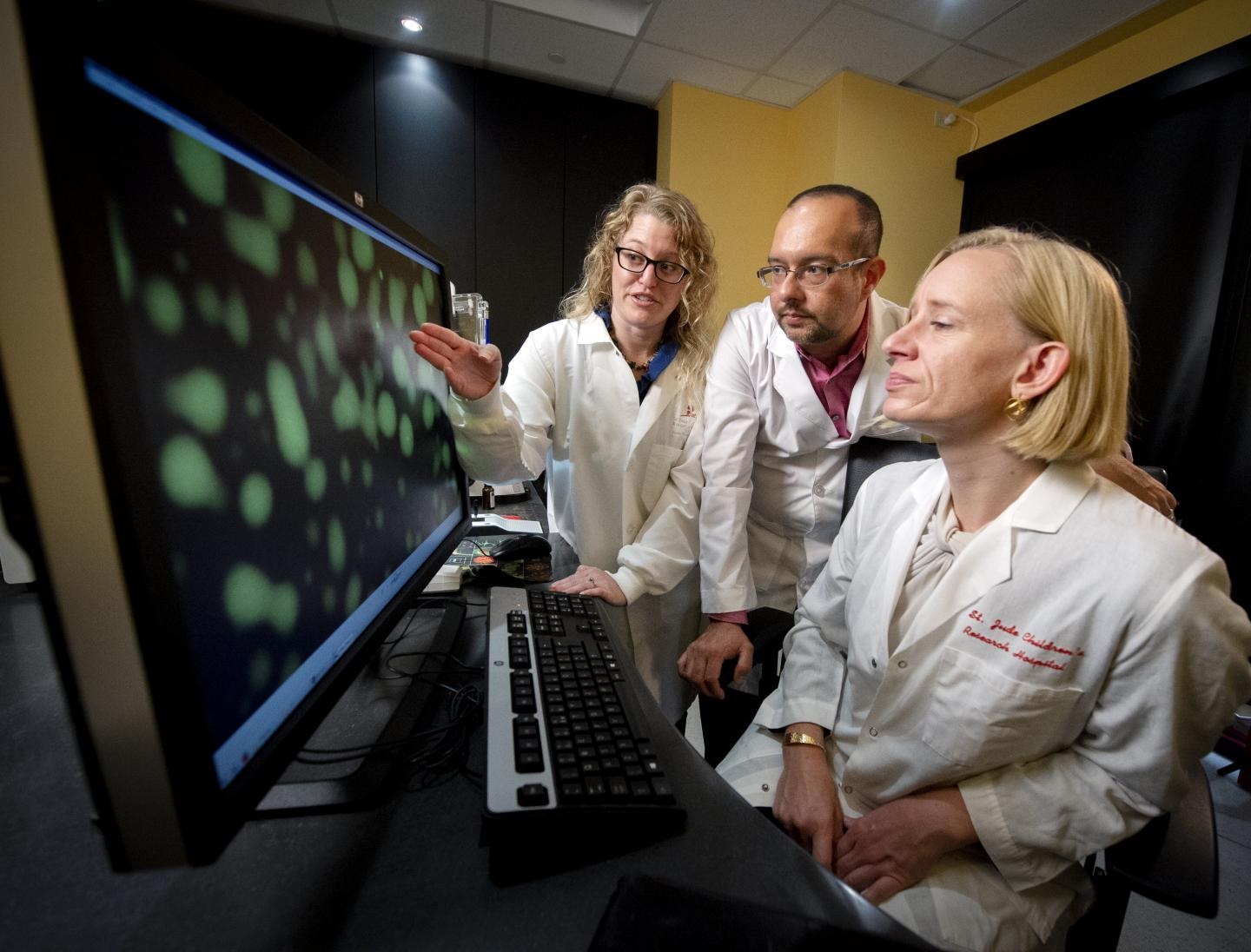
Image: Jill Bouchard, Ph.D., Joel Otero, Ph.D., and Tanja Mittag, Ph.D., were studying SPOP initially to better understand its role in the mechanism of protein degradation, but the investigation became more complicated. Image courtesy of St. Jude Children's Research Hospital / Ann Margaret Hedges.