Researchers from the University of California, Riverside report that a synthetic compound known as indazole chloride can reduce multiple sclerosis symptoms in mouse models promoting remyelination to axons and altering the immune system. Their work was published in PNAS yesterday.
"While additional translational studies are required, indazole chloride and similar drugs may represent a promising new avenue of treating the underlying loss of myelin in multiple sclerosis," said study leader Seema Tiwari-Woodruff.
Multiple sclerosis occurs when the immune system attacks and damages myelin sheath, which causes nerve signals to slow down or stop. Oligodendrocytes are the cells that are responsible for myelinating the central nervous system, but this process often fails in multiple sclerosis resulting in permanent damage. The researchers found the change in the immune system provides a protective shield for oligodendrocytes, preventing this damage and possibly even reversing it.
"With remyelination of axons, nerve impulses travel faster than before, thus decreasing multiple sclerosis disability," Tiwari-Woodruff said. "As a potential therapy for the treatment of multiple sclerosis, indazole chloride may represent the first in a novel class of drugs capable of reducing disability burden in patients with multiple sclerosis. We still don't know the mechanism of action of pre-clinical therapies like indazole chloride. Our report aims to understand how drugs like indazole chloride are working so we can make more selective and efficacious drugs."
 Indazole chloride, a ligand, stimulates ERβ, an estrogen receptor in the body. Indazole chloride is looks to be promising because it does not produce the negative side-effects of estrogen therapy. Indazole chloride also looks promising because ERβ is also present in microglia, T cells and neurons. So there could be benefits for other autoimmune diseases as well.
Tiwari-Woodruff notes that some inflammation can actually be beneficial and promote healing. Tiwari-Woodruff and her group found that indazole chloride strengthens the production of a molecule called "CXCL1," which makes oligodendrocytes resistant to "bad" inflammatory signals.
The team is currently looking for similar and more effective analogous of indazole chloride.
"It's quite possible we may find an analog far superior to indazole chloride," Tiwari-Woodruff said.
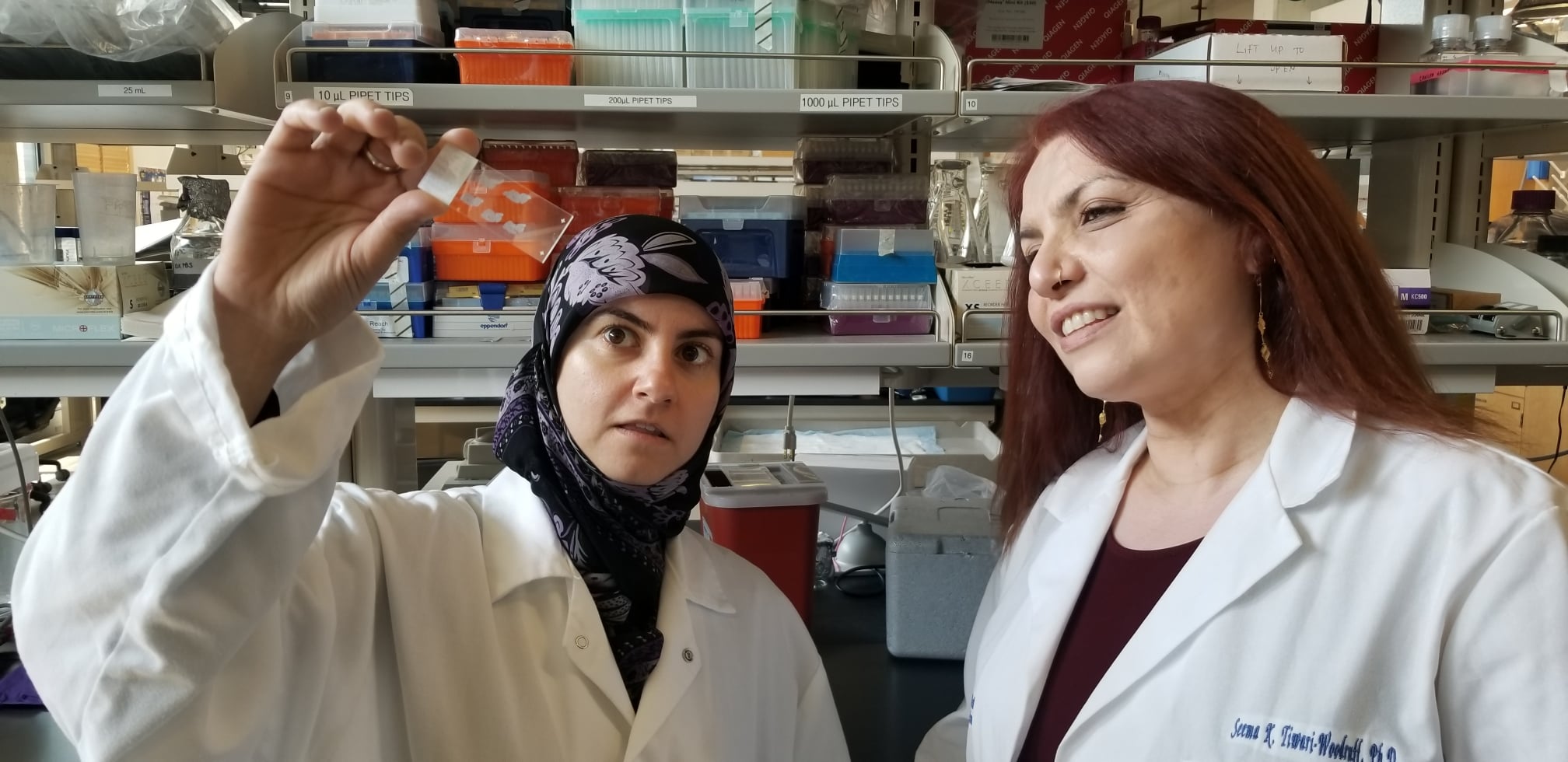
Image: Hawra Karim (left) and Seema Tiwari-Woodruff. Image courtesy of I. Pittalwala from UC Riverside.