Researchers from The Scripps Research Institute have shown that screening for drugs using 3D structures of cancer cells can be more thorough than traditional 2D screening.
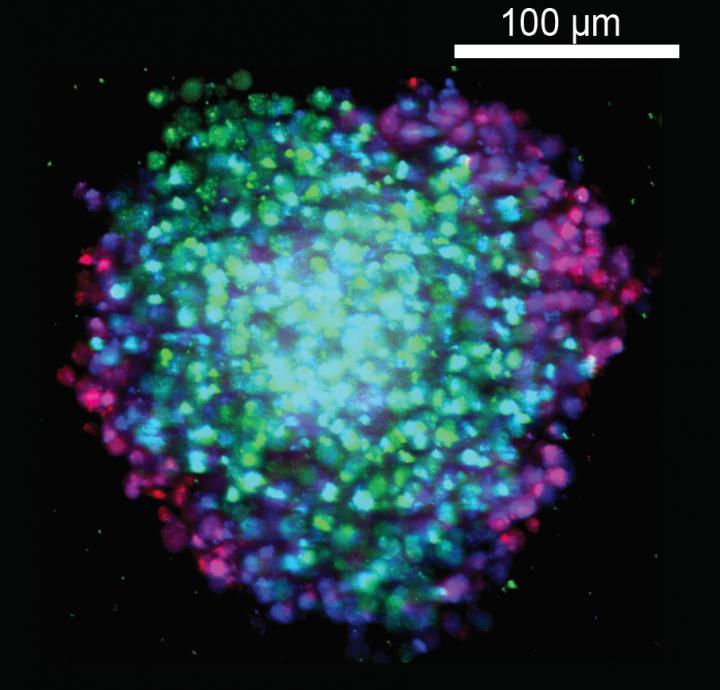
In a paper published in Oncogene last week, the team described the use of a spheroid-based 3D culture format in a high-throughput screen. Using this approach the team said it had already identified one potential drug against KRAS.
"What's important about this research is that we're able to do studies using a form of cancer cells that is more physiologically relevant and better recapitulates how these cells appear in the body," says Timothy Spicer, director of lead identification discovery biology and high throughput screening on Scripps Research's Florida campus, and one of the study's corresponding authors.
"Until now, most of the research to screen for cancer drugs has used cells that are growing flat on a plate," adds Louis Scampavia, director of HTS chemistry and technologies at Scripps Research and one of the study's co-authors. "With these 3D spheroids, we emulate much more closely what's found in living tissues."
For this study, the researchers focused on KRAS. The KRAS gene and other members of the related RAS gene family have been found to be mutated in nearly one-third of all cancers. They are common in lung cancer, colorectal cancer, and especially pancreatic cancer.
"In the past, KRAS has been a very tricky protein to target. People have spent several decades trying, but so far there has been little success," explains Joseph Kissil, professor at Scripps Research Medicine and the other co-corresponding author. "The KRAS protein is relatively small, and that's made it hard to attack it directly. But the method of screening that we used in this study allowed us to come at the question in a different way."
The investigators performed a phenotypic screen, which means they were looking for drugs that had an effect on cell growth, but didn't have a preconceived idea about how they might work. "We came at this in an unbiased way," Kissil adds. "We were not trying to design something to attack a specific part of the KRAS protein. We were just looking for something that acted on some part of the pathway that's driving cell growth."
The compound that they identified that was previously not known to affect KRAS is called Proscillaridin A. The compound is similar to a class of drugs used to treat some heart conditions. Although the team says this particular drug is unlikely to be developed as a cancer treatment, it validates the approach of conducting drug screenings using spheroids. "It's unlikely we would have discovered this connection using standard 2-D methods," Scampavia says.
Image: The researchers used confocal microscopy to confirm that the cell lines were forming spheres. Here is the BxPC-3-KRASWT cell line. Image courtesy of Kota et. al./The Scripps Research Institute.