A new research study has identified that ion channels could be a viable drug target for treating diseases caused by neurological inflammation, such as Alzheimer’s and Parkinson’s disease, in addition to other inflammatory diseases. Traditional treatments for brain diseases have been mostly ineffective because drugs are blocked by the blood-brain barrier. This new finding focuses on using ion channels in specific immune cells as a switch to control the influx of calcium into the cells, thus preventing an inflammatory response. The study, conducted at the University of Virginia School of Medicine, was published in Immunity.
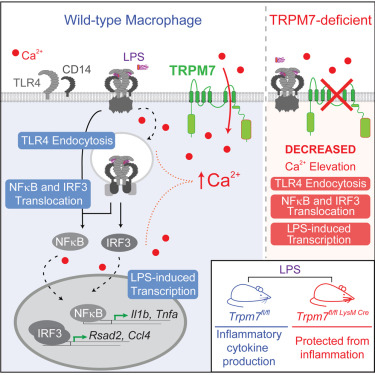 Toll-like receptors (TLRs) are an important part of the innate immune system and are expressed on immune cells such as macrophages and dendritic cells. An immune response is activated by TLRs when they come into contact with foreign bodies such as microbes. The research identified that ion channel TRPM7 is a key component of the TLR4 signaling cascade and controls the influx of calcium ions into macrophages which induces their activation. The team demonstrated that macrophages deficient in this ion channel protein were not able to produce an LPS-induced inflammatory response. By targeting this ion channel switch and preventing calcium activation, inflammation could be prevented even in the brain.
"Small molecules are perhaps more affordable as treatments and can hit things like this ion channel switch, TRPM7," said researcher Michael Schappe, a graduate student in Desai's lab. "We could use that to address inflammation in a bunch of contexts, but particularly in instances like neuroinflammation, where [current] treatments are particularly ineffective."
The researchers also noted that patients with diseases like Inflammatory Bowel Disease (IBD) or arthritis could benefit from small molecule drug therapies that target ion channel switches. Current biological treatments for these types of diseases are expensive and must be delivered intravenously, making them difficult to distribute. Small molecule drugs are much less expensive to manufacture and patients can take them orally, making them an attractive option that drug companies are already investigating to treat inflammatory diseases.\
Image: TLR4 signaling cascade in wild type vs. TRPM7-deficient mice. Image courtesy of Scappe et al., 2018.