A new method to determine levels of cysteine has been developed. Unlike current methods, this one does not require complex reactions or expensive equipment, according to researchers at Lomonosov Moscow State University. Details on their label-free gold nanoparticle based technique were published in Sensors and Actuators B recently.
Cysteine is an amino acid found in keratins and other proteins. It deactivates toxins, acts as an antioxidant, and is used in drugs and food additives. Its presence in blood may be an indication of certain conditions, such as Alzheimer's disease or cardiovascular, liver, or skin disorders.
Typically, the level of cysteine in a solution is detected using the luminescence method, but it requires expensive equipment, additional procedures, and qualified personnel. This new method uses aggregation of label-free gold nanoparticles. It was found that attaching the gold nanoparticles to polyurethane foam surfaces changed their sensitivity and selectivity, which was harnessed for determination of cysteine levels.
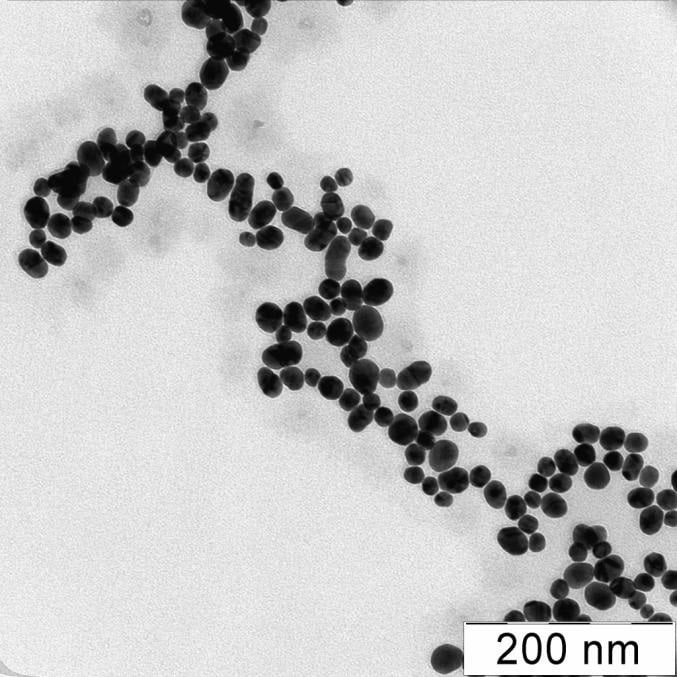
"It is very easy to obtain such particles, especially the non-modified ones. One just has to take a gold compound, say, chloroaudic acid, and sodium citrate, mix them and heat up—that's all the synthesis that is required. The process is simple and can be carried out in almost any lab," explained Vladimir Apyari, a co-author of the work, senior research assistant of the Faculty of Chemistry, MSU, and doctor of chemistry.
The scientists decided to use gold nanoparticles due to their ability to quickly change color (from ruby red to blue) upon aggregation into bigger formations. When nanoparticles react with cysteine, they are aggregated, and the solution's spectral characteristics and color change. These changes can be measured with a spectrophotometer or even seen with a naked eye. The reaction takes a couple of minutes.
Cysteine detection in a solution has certain disadvantages. For example, no spectrophotometer analysis can be carried out in a muddy or colored environment, and cleansing is required. To avoid it, nanoparticles may be placed on the surface of a solid material, such as polyurethane foam. The particles are completely consumed by polyurethane foam in 15-20 minutes.
Image: Aggregates of nanoparticles formed under the influence of cysteine. Image courtesy of Vladimir Apiary.