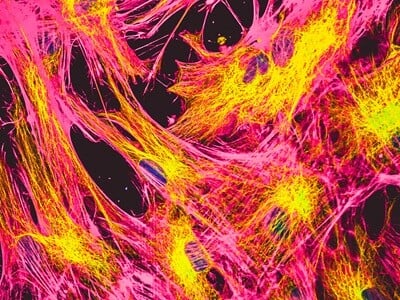
 Multiplexed immunofluorescence imaging is a relatively new, exciting, and rapidly growing technique in life science research that is helping researchers get more information out of their samples. At the most basic level, multiplexed immunofluorescence is a term that describes techniques that let scientists probe a single sample with more biomarkers (as many as 60+) than would be possible in a traditional fluorescence experiment. For researchers that are new to this space, or are just beginning to investigate multiplexing, it can be difficult to understand the different types of solutions that are available and even more difficult to make a final decision.
In this application note from Leica, learn what factors to consider when evaluating potential multiplexed imaging solutions, how each solution fits with research needs, and the limitations that each approach brings.