Caspases are cysteine-dependent, aspartate-specific proteases, which play essential roles in apoptosis and are also required in the immune system for the maturation of cytokines (such as IL-1 and IL-18). They exist as latent precursors, which, when activated, initiate the death program by destroying key components of the cellular infrastructure and activating factors that mediate damage to the cells. Caspase activation is generally considered as the “point of no return” in apoptotic pathways. Caspases are activated via two major pathways: the receptor-mediated pathway and the mitochondrial pathway. Thus far, 14 members of the caspase family have been identified, 11 of which are present in humans. Failure of apoptosis is one of the main contributions to tumor development and autoimmune diseases; this coupled with the unwanted apoptosis that occurs with ischemia or Alzheimer's disease, has boomed the interest in caspases as potential therapeutic targets since they were discovered in the mid 1990s.
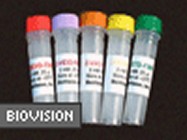
The kit contains inhibitor to caspase-1 (YVAD), caspase-3 (DEVD), caspase-6 (VEID), caspase-8 (IETD) and a caspase-family inhibitor (VAD). Inhibitor design includes a peptide recognition sequence attached to a functional group fluoromethylketone (FMK) and a benzyloxycarbonyl group (Z) at the N-terminus and O-methyl side chain for enhanced cellular permeability. Caspase inhibitors are added to the cells, 1 to 2 hours prior treatment. A working concentration of 2 uM is recommended for the inhibitors included in this set. However, caspase inhibitors have been successfully used in tissue cultures to inhibit apoptosis at final working concentrations of 50 nM to 100 uM. The inhibitors are reconstituted in DMSO, and a total level above 1% may cause cellular toxicity thus masking the effect of the inhibitor. The investigator must establish the most effective concentration for their particular assay. The cells should then be cultured as required to induce apoptosis or induction of pro-IL-1. Treated cells can then be assayed for evidence of caspase inhibition by examining either whole cells or cell lysates using standard apoptosis assays or the presence of mature IL-1 in the supernatant by ELISA.
We have used this kit to estimate the role of caspase, caspase-1 particularly, in the cleavage of pro-IL-1 upon bacterial infection of primary mouse thioglycolate-induced macrophages. We pretreated the cells for 1 hour with the various inhibitors at a concentration of 2 uM. The cells in presence of inhibitor were then bacterially infected for 6 hours. We analyzed the secretion of mature IL-1 in the supernatant using an ELISA.
Instructor
Department of Medicine
University of Massachusetts