A technique to precisely measure the forces exerted by a wide range of micron-sized organisms has been developed. Called 'micropipette force sensors', this novel method is described in a paper published today in Nature Protocols.
"The working principle of the micropipette force sensor technique is beautifully simple: by optically observing the deflection of a calibrated micropipette, the forces acting on the pipette can be directly measured", says Matilda Backholm, researcher at Aalto University in Finland.
This technique can be applied to a large variety of biological systems, ranging from a single cell to a millimeter-size microorganism. "We exemplified the versatility of our method using two model systems from microbiology, but certainly the technique can and will be applied to other biological systems in the future," says Oliver Bäumchen, research group leader at the Max Planck Institute of Dynamics and Self-Organization.
Search Antibodies Search Now Use our Antibody Search Tool to find the right antibody for your research. Filter
by Type, Application, Reactivity, Host, Clonality, Conjugate/Tag, and Isotype.
"The idea behind the technique is to combine the advantages of several established biophysical techniques: we use a micropipette to grab a living cell, in the exact same way as it is done in in-vitro fertilization, and study the mechanical forces by measuring the pipette's deflection using the measurement principles underlying atomic force microscopy," adds Bäumchen.
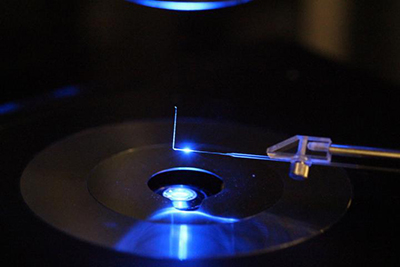 "In contrast to other force measurement methods, we detect the deflection of our highly sensitive micropipette simply by observing it with a state-of-the-art microscope. This allows us to inspect the shape and motion of the microorganism with high optical resolution, while we are measuring the forces simultaneously," Backholm explains. During all of this, the cell or microorganism is fully intact and alive, which allows for testing its reaction to drugs as well as nutrients, temperature and other environmental factors. "The force resolution is really remarkable. With our recent technological advancements, we successfully managed to detect forces down to about ten piconewtons, which is almost as good as an atomic force microscope," says Bäumchen.
The researchers expect that their method will be applied in other research labs in the future to tackle a plethora of important biophysical questions, aiming at better understanding biological functions of cells and microorganisms, as well as their underlying physical principles.
Image: A micropipette force sensor under the optical microscope. Image courtesy of Dr. Oliver Bäumchen / MPIDS.