Chronic rhinosinusitis, caused by allergic inflammation in the upper airway, can range in severity from sinus inflammation to development of nasal polyps. If the polyps reach a stage that is too severe, they must be surgically removed. New findings recently published in Nature have identified cellular and transcriptomic mechanisms that may drive chronic rhinosinusitis and polyp formation. The work, led by MIT, capitalizes on a novel method of single-cell RNA sequencing.
 "We saw major gene-expression differences in subsets of epithelial cells which had been previously obscured in bulk tissue analyses," said senior study co-author Alex K. Shalek. "When you look across the entire transcriptome, comparing cells from patients with different disease statuses over thousands of genes, you can start to understand the relationships between them and discover which transcriptional programs have supplanted the usual ones.”
The team had developed Seq-Well, a portable platform that allows rapid massively parallel single-cell RNA sequencing from small clinical samples. From the analysis of primary human surgical samples comprising over 18,000 cells, the team obtained transcriptome data that covered human respiratory epithelial, immune and stromal cell types and subsets from a type 2 inflammatory disease.
Striking differences were observed in the basal epithelial stem cells from patients with and without nasal polyps. In patients without polyps and in healthy people, these cells normally form a flat base layer of tissue that coats the inside of the nasal passages. However, in patients with polyps, these cells begin to pile up and form thicker layers instead of differentiating into the epithelial cell subsets that are needed for defense.
The dysfunctional basal cells had also turned on a specific program of gene expression that appears to be sustained directly by IL-4 and IL-13. These are immune response cytokines known to drive allergic inflammation when overproduced at pathologic levels. Moreover, the basal cells have retained an intrinsic memory of IL-4 and IL-13 exposure. It is known that memory of an allergen can cause the immune system to overreact the next time the same allergen is encountered.
"It suggests that blockade of IL-4 and IL-13 can help to restore basal cells and secretory cells towards a healthier state," said study first author Jose Ordovas-Montanes. "However, there's still some residual genetic signature left. So now the question will be, how do you intelligently target that remainder?"
The team concluded that dysfunction in basal stem cell differentiation reduces epithelial stem cell diversity and that epithelial stem cells may contribute to the persistence of human disease by serving as repositories for allergic memories.
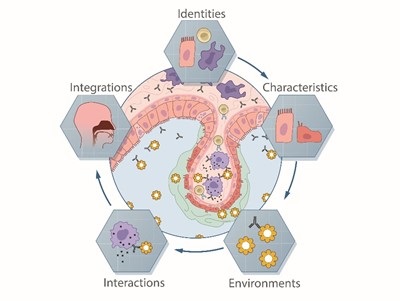
Image: Associations that drive allergies at the cellular level. Image courtesy of the Shalek Lab.