New findings published in Immunity have found that the activation of an environmental sensor protein can protect intestinal epithelial cells from inflammation and colon tumorigenesis. The work, which comes from The Francis Crick Institute in London, also links this signaling pathway to compounds found in vegetables.
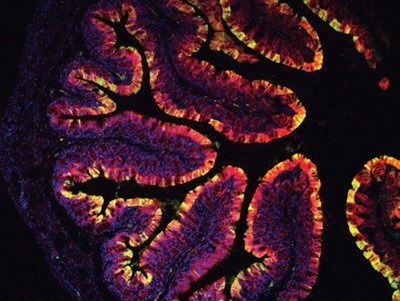 The team used mice and mouse gut organoids—small intestinal models derived from stem cells—to study the signaling protein, known as aryl hydrocarbon receptor (AhR). They found that AhR is vital for repairing damaged epithelial cells. Without it, intestinal stem cells failed to properly differentiate into the epithelial cells that absorb nutrients or generate protective mucus. Instead, the stem cells continued to divide uncontrollably.
"We studied genetically modified mice that cannot produce or activate AhR in their guts, and found that they readily developed gut inflammation which progressed to colon cancer," said study first author Amina Metidj.
What could activate AhR, the team found, were certain ligands that could be obtained from vegetables.
“Many vegetables produce chemicals that keep AhR stimulated in the gut. We found that AhR-promoting chemicals in the diet can correct defects caused by insufficient AhR stimulation. This can restore epithelial cell differentiation, offering resistance to intestinal infections and preventing colon cancer,” said study senior co-author Gitta Stockinger”
Among the strongest AhR ligands, the team found, could be derived from phytochemicals such as indole-3-carbinol. The compound is produced by the breakdown of the glucosinolate glucobrassicin, found at relatively high levels in cruciferous vegetables such as broccoli, cabbage, cauliflower, brussels sprouts, and kale.
"A number of epidemiological studies suggested that vegetables may be protective against cancer," explained Gitta. "However, there is very little literature on which vegetables are the most beneficial or why. Now that we've demonstrated the mechanistic basis for this in mice, we're going to investigate these effects in human cells and people. In the meantime, there's certainly no harm in eating more vegetables!"
Image: A mouse colon from Cyp1a reporter mice after feeding with I3C. Image courtesy of Chris Schiering, Francis Crick Institute.