 Researchers from UT Southwestern Medical Center have identified potential targets for treatment of triple negative breast cancer. The work appears in yesterday's Cell Metabolism.
"Alterations in these two genes are easily detectable with tumor gene tests in current use. Combinations of drugs that inhibit MCL1 or MYC, or both, have the potential to reduce the development of chemotherapy resistance and should be studied in clinical trials," said Carlos Arteaga, M.D., professor of internal medicine at UT Southwestern Medical Center.
About 15% of breast cancers are triple-negative breast cancers and most breast cancers are treated with hormone therapy. However, in triple-negative breast cancers, not all cancer cells are influenced by hormones. Therefore, patients with triple-negative breast cancer are often treated with chemotherapy. Unfortunately, an issue with treating with chemotherapy is that many triple-negative breast cancers become resistant to it.
In this work, the researchers found that if the activity of MCL1 or MYC genes is inhibited, the likelihood of chemotherapy resistance is lower. Currently, drugs that inhibit MCL1 and MYC are in development and researchers hope that if given in conjunction with standard chemotherapies, the development of chemotherapy resistance could be slowed down or prevented, giving patients a better chance.
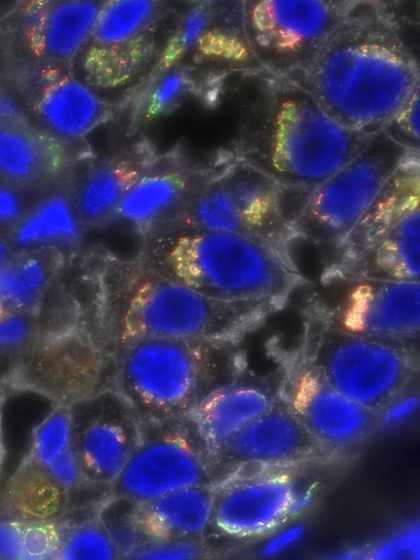
Image: Triple-negative breast cancer cells, shown here, often become resistant to chemotherapy over time. New research suggests drugs that inhibit the genes MCL1 or MYC might prevent this. Image courtesy of NCI.