 Researchers from Instituto de Medicina Molecular (iMM) Lisboa have found that the host's susceptibility to developing malaria depends on his or her metabolic state. The work was published in Nature Microbiology yesterday.
The team, led by Maria Mota, Ph.D., manipulated the diet fed to lab mice for very short periods of time and evaluated the level of infection caused by the malaria parasite. From this work, the scientists found an increase in the levels of pro-oxidants caused by dietary shifts lead to a 90% reduction in parasite load during the hepatic phase of the infection and consequently lowers the severity of the disease.
The host mechanism used to get rid of the malaria parasite may help explain how different genetic alterations are associated with high levels of oxidative stress and have been selected in the population due to their protective effect against malaria.
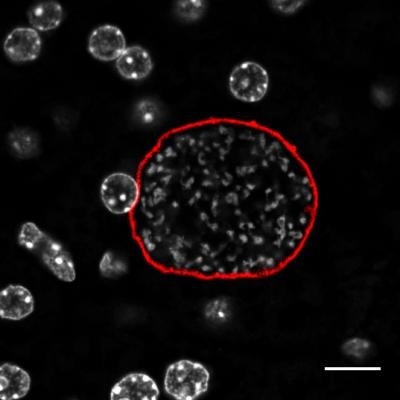
Image: Plasmodium parasite developing inside an hepatocyte (liver cell) 48 hours after infection. Image courtesy of Maria Mota lab, iMM Lisboa.