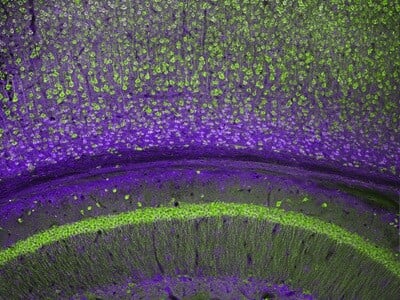
 Human bodies are complex and intricate 3D structures, and spatiality plays an integral role in how they operate. Spatial biology focuses on characterizing how cells, proteins, and other biological building blocks are spatially organized during normal and disease situations. Empowered by new technologies and techniques that let them see and track more, scientists are delving deeper into how proximity, localization, and migration affect cancer, cardiovascular diseases, and neuropathology.
In this ebook, discover why the spatial dimension matters and how scientists are creating novel strategies and tools to parse and analyze transcriptomic, metabolomic, and imaging-based data.