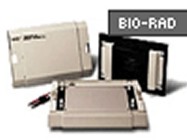
I used the system to transfer proteins isolated from mouse lung cells. The cells were rich in Clara Cell cytosolic proteins. The study investigated the relative changes in the expression level of Clara Cell Protein 10 kDa (CC10) after exposure to styrene oxide racemic (i.e. a mixture of styrene oxide R and styrene oxide S). Clara Cell proteins are known to have a high percentage of carbohydrates and lipids. The post-translational modifications of the Clara Cell proteins of interest posed some difficulties in sample handling and transfer conditions. These problems probably could have been limited with an enzymatic/organic extraction of the proteins to remove the lipids and carbohydrates. We decided not to perform this extraction because with a small proteins like CC10 (~10 kDa), we would risk loosing small changes in the expression level; there is also a relatively high potential for chemical/structural changes.
We transferred to Millipore’s Immobilon, 0.22 micron PVDF membrane; this did an excellent job. When transferring to PVDF membrane, the pre- and post-transfer treatment of the membrane is critical with respect to protein transfer. The membrane was saturated in either methanol or isopropanol for thirty seconds to a minute and then briefly hydrated with ddH2O for no more than ~15 seconds before transfer. After transfer, the membrane was once again dipped in methanol or isopropanol for thirty to sixty seconds. The membrane is then hydrated for roughly 15-30 seconds. This is critical for removal of salts and rehydration of membrane so the primary antibody is not repelled from the membrane/sample due to hydrophobicity. Hydration at too long an interval causes miscelles to form and the carbohydrates to become more soluble thus not in contact with the membrane. In higher molecular weight proteins, this is not as large of a problem, but for optimal performance, the membrane should be properly treated pre- and post- transfer.
We generally ran single gels which were loaded at 12 mA then turned up to 32-34 mA after all samples were loaded; when the proteins reached the interface stacker/body, the setting was turned to 22 mA. The bodies of the gels were 15% at pH 8.8 and the stacker was 6% at pH 6.8. The gel running buffer was pH 8.3 Tris/glycine/SDS. The gel was briefly rinsed in ddH2O before transfer. I used a 90 minute transfer at 70 mA which effectively transferred low molecular weight proteins. The power unit is set in 10 mA increments and it would have been nice to be able to set the transfer with 5 mA or 1 mA increments. The efficiency of the transfer was verified by placing another membrane on the stacker and looking for any flow through of the protein. After transfer, the gel was also stained with Coomassie to look for any proteins which did not transfer.
In summary, Bio-Rad’s Trans-Blot® Semi-Dry Electrophoretic Transfer system worked well. The directions for the system were fairly complete and thorough. However, I wish that some recommendations/suggestions were given regarding the preparation of different types of samples or ranges of conditions. The system did a nice job with the even transfer of proteins across the gel; it as was also preformed reproducibly from transfer-to-transfer. Since the system performed so well with mouse Clara Cell proteins, it can be assumed that it would do well with nucleic acids which are of a more homogenous nature than in vivo cellular isolations.
Former Scientist II
Division Biochemical/Diagnostics
Boehringer Mannheim