A new study gives a plausible explanation on how and why mesenchymal stem cells (MSCs) continue to suppress inflammation in the body long after the MSCs are cleared from the system. The findings could help overcome a critical barrier to MSCs being considered a reliable option when developing treatments for inflammatory diseases ranging from COVID-19 and cancer, to allergies, arthritis and more.
"While MSCs are widely used in clinical trials due to their ability to modulate inflammation, their success over the past 25 years has been varied—something that is likely a result of us not being able to totally understand how they work," said Duke’s Anthony Filiano, Ph.D., co-leader of the study published in STEM CELLS today.
The ability for MSCs to suppress T cells is well documented in the lab, but little is known how they function in the body. "What we do know," Dr. Filiano continued, "is that after MSCs are injected into the body, they travel to the lungs and other tissues and then are rapidly cleared. Despite this, MSCs suppress the inflammatory response long-term. If the reason behind why and how this is happening can be determined, the information could be very helpful in developing new treatments for a variety of inflammatory diseases."
Search Antibodies Search Now Use our Antibody Search Tool to find the right antibody for your research. Filter
by Type, Application, Reactivity, Host, Clonality, Conjugate/Tag, and Isotype.
In search of an answer, the Duke team injected human cord tissue-derived MSCs (hCT-MSCs) into mice with induced lung inflammation. Twenty-four hours later when the mouse lungs were analyzed, "We found that pieces of the MSCs had been engulfed by monocytes and macrophages, in effect clearing them from the animals' systems," study co-leader Hyunjung Min, Ph.D., reported. "We also noted long-term transcription changes in the cells that ate pieces of MSCs suppressed the activation of T cells."
Next, using a combination of computational and pharmacological approaches, the researchers identified potential receptors on monocytes and macrophages that mediated their interactions with the hCT-MSCs and blocked interaction with a pharmacological inhibitor. They also identified a key cytoplasmic organelle in hCT-MSCs necessary to reprogram the monocytes and macrophages.
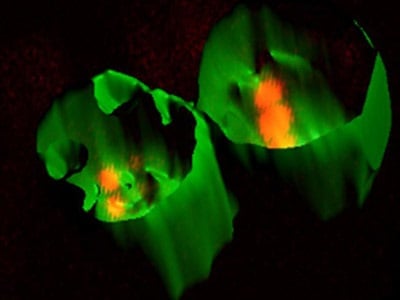
"Our results shed light on how MSCs can modulate the inflammatory response without long-term engraftment using a previously undescribed form of cell communication," said Dr. Filiano, "and explain how MSCs have extended beneficial effects on the body despite being cleared just hours after administration."
Image: Monocytes and macrophages engulf cytoplasmic components of mesenchymal stromal cells and are reprogrammed to suppress a T cell response. A 3D reconstruction and surface rendering of a confocal z-stack from monocytes and macrophages (green) cocultured with MSCs derived from human umbilical cord tissue. Prior to co-culturing, the MSCs were stained with the cytoplasmic marker Qtracker (red).