Chandelier cells stand out in the brain due to their elaborate, branching structure. With an elegant shape similar to that of its namesake, a single chandelier cell reaches out to connect and communicate with more than 100 other neurons. Abnormalities in chandelier cells have been linked to epilepsy, autism, and schizophrenia, underscoring their critical role in keeping brain signaling in balance. However, these cells have been notoriously difficult to study, as their numbers are few.
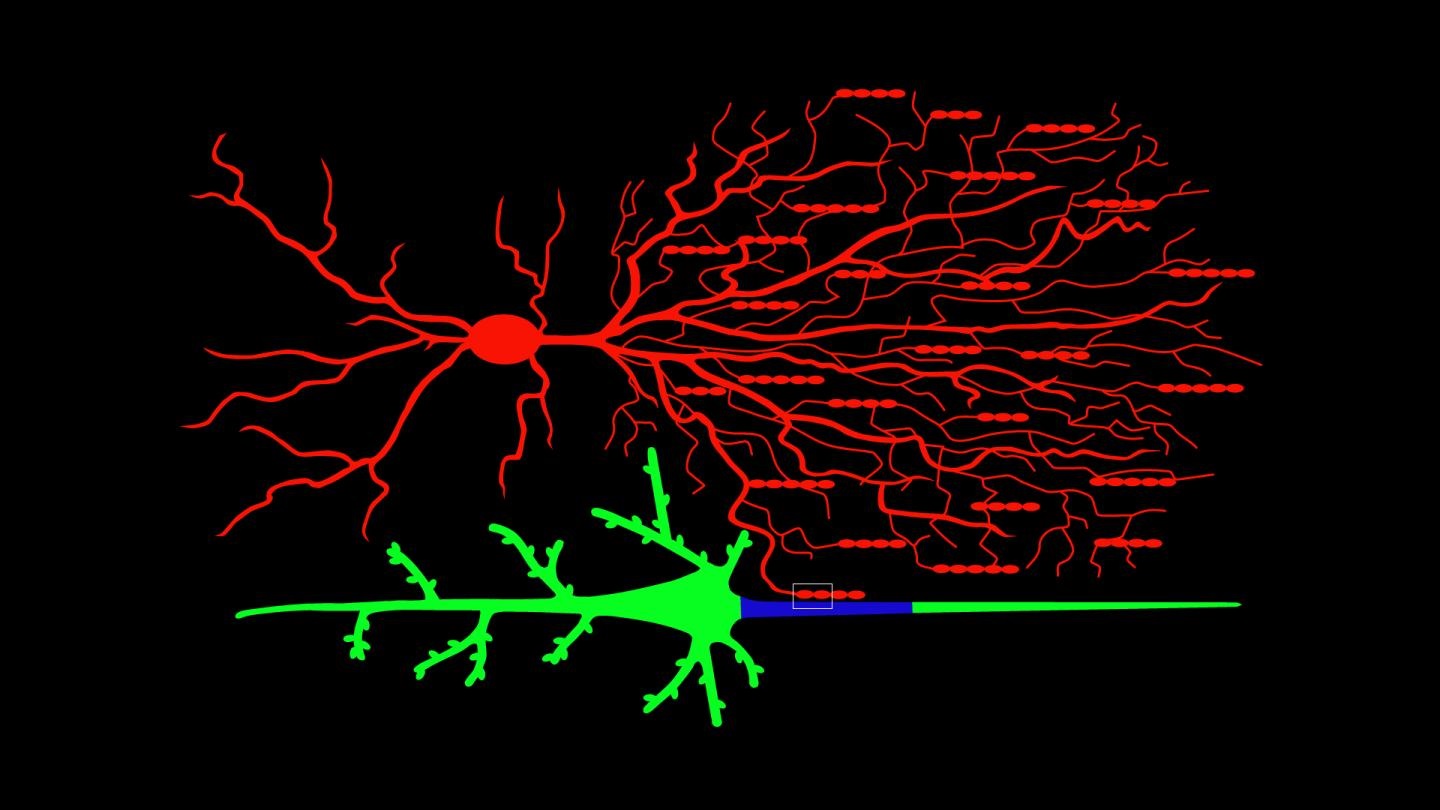
In an article published today in Trends in Neurosciences, CSHL researchers show that, in addition to the sheer abundance of their connections, chandelier cells have an unusually direct method of communication. Most neurons contact their target neurons in such a way that they don’t directly generate electrical spikes, but chandelier cells connect directly to the part of a target neuron that initiates a spike. “In principle,” says senior author Linda Van Aelst, “the chandelier cell is ideally suited to exert powerful control over the output or spiking of neighboring neurons.”
In recent years, scientists have been able to apply new tools to understanding these previously poorly understood cells. In particular, a genetically engineered mouse from CSHL Professor Z. Josh Huang and a labeling method developed in Van Aelst’s laboratory have given researchers the ability to find and manipulate the cells.
Search Antibodies Search Now Use our Antibody Search Tool to find the right antibody for your research. Filter
by Type, Application, Reactivity, Host, Clonality, Conjugate/Tag, and Isotype.
In the new article, the authors detail important discoveries about when and how chandelier cells form and establish their connections as well as how they contribute to neurodevelopmental disorders. For example, first author Nicholas Gallo describes how epilepsy could be caused by having too many or too few chandelier cells:
"The main take-home point is that there’s this imbalance in the excitation and inhibition in the brain,” Gallo says. “So I was thinking it’s like a Seesaw, you know, to keep it level, so stuff functions properly. But if you have an increase in inhibition or an increase in excitation, either way, it's going to cause epilepsy. If you cause too much excitation you’d get a seizure.”
Priorities for future research include looking at how chandelier cells differ in different parts of the brain as well as determining how other cell types influence chandelier cell development and wiring. Importantly, Van Aelst, Gallo, and Paul say such studies will allow them to tease out the cells’ functional roles and their contributions to disease.
Image: Illustration of a chandelier cell (on top in red) connecting to a pyramidal neuron (in green on the bottom) on its axonal initial segment (in blue). Image courtesy of CSHL.