According to a paper published in Nano Letters today, cellular nanosponges could be an effective medical countermeasure to the SARS-CoV-2 virus. As proof of concept, the team coated nanosponges with human cell membranes—the natural targets of the virus—and found that they successfully soaked up SARS-CoV-2 and kept it from infecting cells in a petri dish.
To gain entry into cells, SARS-CoV-2 uses its spike protein to bind to ACE2 and CD147. Blocking these interactions would keep the virus from infecting cells so many researchers are trying to identify drugs directed against the spike protein. The authors of the Nano Letters paper had a different idea: making a nanoparticle decoy with the virus' natural targets, including ACE2 and CD147, to lure SARS-CoV-2 away from cells.
Coronavirus Research ProductsSearch Now Find the right products for your coronavirus-related research. Biocompare's Coronavirus Research Products category includes commercially available antibodies, ELISA kits, proteins, strains, and PCR assays.
To test this idea, the team coated a nanoparticle polymer core with cell membranes from either human lung epithelial cells or macrophages—two cell types infected by SARS-CoV-2. They showed that the nanosponges had ACE2 and CD147, as well as other cell membrane proteins, projecting outward from the polymer core. When administered to mice, the nanosponges did not show any short-term toxicity. Then, the researchers treated cells in a dish with SARS-CoV-2 and the lung epithelial or macrophage nanosponges. Both decoys neutralized SARS-CoV-2 and prevented it from infecting cells to a similar extent.
In theory, the nanosponge approach would work even if SARS-CoV-2 mutates to resist other therapies, and it could be used against other viruses, as well, the researchers say.
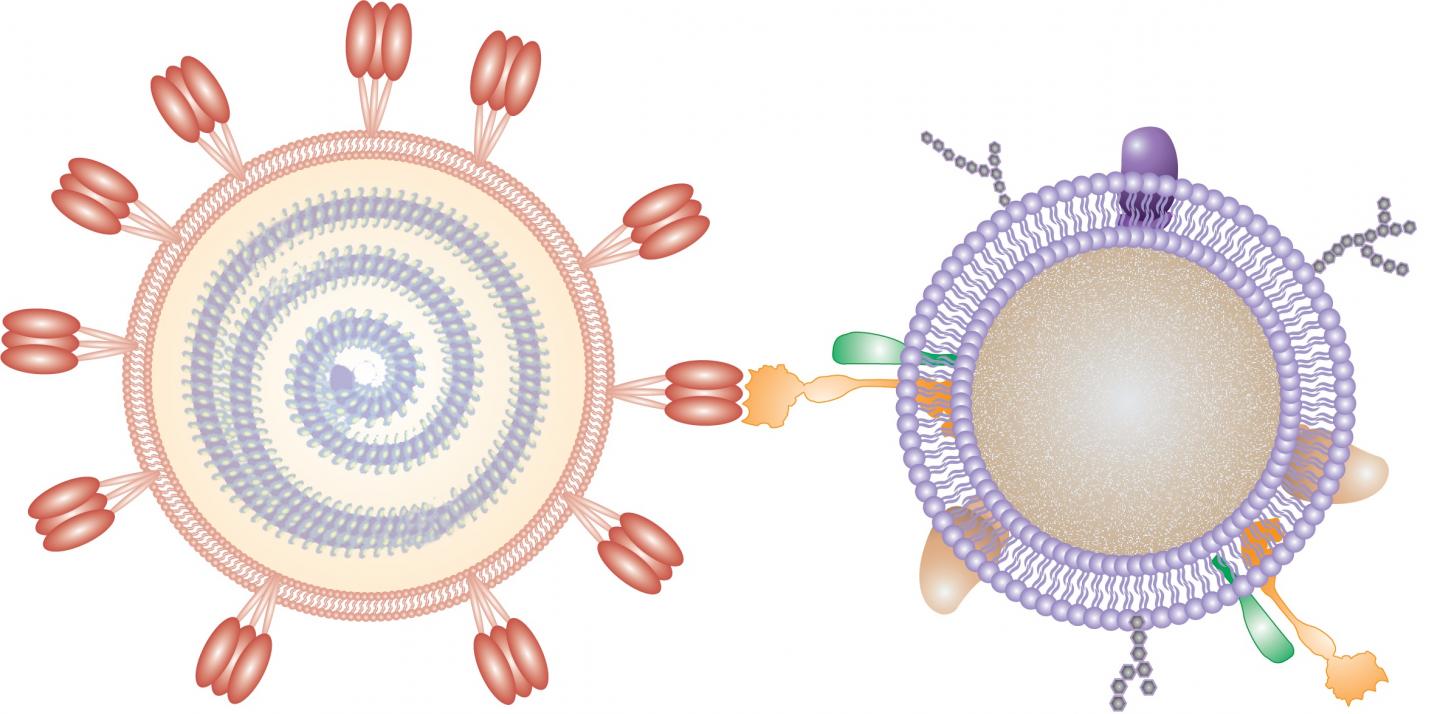
Image: A nanosponge coated with a human cell membrane acts as a decoy to prevent a virus from entering cells. Image adapted from Nano Letters 2020.