The brain is our most energy-hungry and metabolically active organ. Because of this, the brain is surrounded by 600 kilometers of blood vessels that bring in nutrients and remove waste. However, the brain is fragile, and it’s essential for it to be able to regulate its environment. Thus, the blood vessels in the brain have evolved to form a tight protective barrier known as the blood–brain barrier that restricts the movement of molecules into and out of the brain.
Given their close relationship, the brain and its vessels need to be able to communicate with one another. In a study published today in Nature Cell Biology, Max Planck Institute researchers have shown how blood vessels sense the metabolic state of neighboring neural cells.
First, the researchers found that the epigenetic regulator MOF is required for equipping neurons with the right metabolic enzymes needed for processing fatty acids. “Something has to tell neural cells that there are nutrients around and they should turn on the programs needed to process them,” says first author Bilal Sheikh. “MOF goes to the DNA and switches on the genetic programs that allow cells to process fatty acids in the brain.”
Search Antibodies Search Now Use our Antibody Search Tool to find the right antibody for your research. Filter
by Type, Application, Reactivity, Host, Clonality, Conjugate/Tag, and Isotype.
Fatty acids are found in food and are used for generating energy and assembling the complex lipids that are required in cell membranes. When the activity of MOF is defective—as occurs in neural developmental disorders—the neurons cannot process fatty acids. This leads to fatty acid accumulation in the interstitial spaces between the brain cells. This imbalance in fatty acids is sensed by the neural blood vessels, stimulating them to mount a stress response by loosening the blood–brain barrier. If the metabolic imbalance remains, the leaky blood–brain barrier can induce a diseased state.
“Our work shows that proper metabolism in the brain is critical for its health,” says senior author Asifa Akhtar. “A defective neural metabolic environment can induce vascular inflammation, dysfunction of the cells forming the blood–brain barrier, and increased permeability. What can follow is neural blood vessel breakdown.”
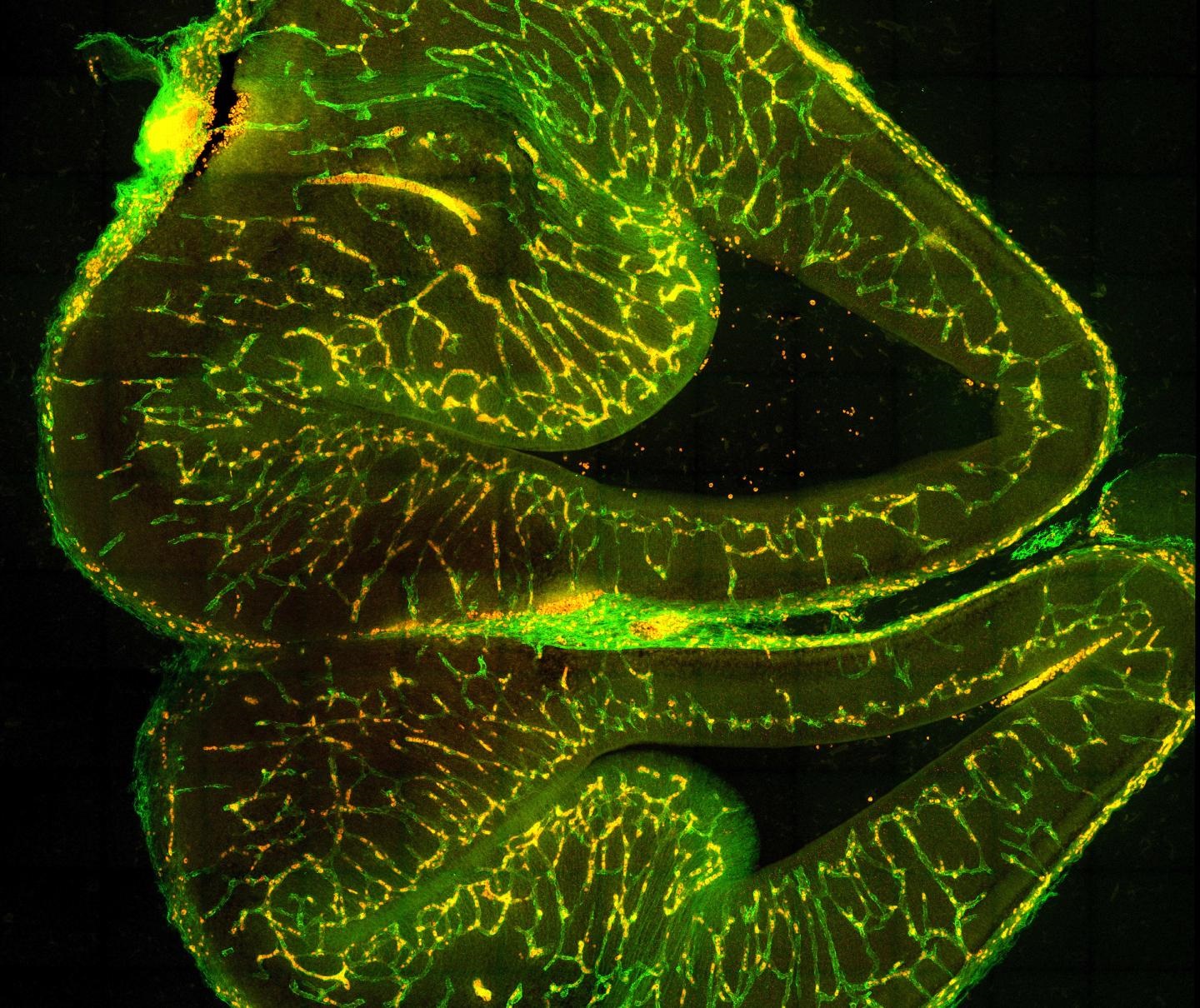
This is particularly important, as neural blood vessel breakdown is a characteristic feature of the onset of age-related diseases such as Alzheimer’s disease and vascular dementia. Better characterization of the molecular changes that induce vascular dysfunction will help design better treatments for age-related diseases such as Alzheimer’s disease and vascular dimentia.
Image: Slice of an embryonic mouse brain showing the development of vascular endothelial cells (green) and mural cells (red). The latter can contract and thus influence the blood flow in the vessels. Image courtesy of MPI of Immunobiology and Epigenetics, B. Sheikh.