When a person is infected by pathogenic bacteria, the human inflammatory response is triggered. This response involves a cascade of events including the expression of protective proteins, the activation of immune cells, and the controlled death of infected cells that can’t be saved. In a study published yesterday in Nature Microbiology, a team of scientists investigated the response of specific immune cells called macrophages to an infection by the intracellular pathogen Salmonella enterica.
The researchers applied a method that they recently developed in their labs to enrich, identify, and quantify all newly produced proteins from Salmonella-infected macrophages. They marked newly produced proteins with a specific chemical label and identified them using mass spectrometry, which allowed them to analyze the entire set of cellular proteins. Importantly, the scientists measured protein levels in macrophages at different infection stages and across different cell compartments. Their study shows that monitoring the dynamic changes in protein production and targeting can reveal new insights into the mechanisms by which cells respond to pathogens.
Search Antibodies Search Now Use our Antibody Search Tool to find the right antibody for your research. Filter
by Type, Application, Reactivity, Host, Clonality, Conjugate/Tag, and Isotype.
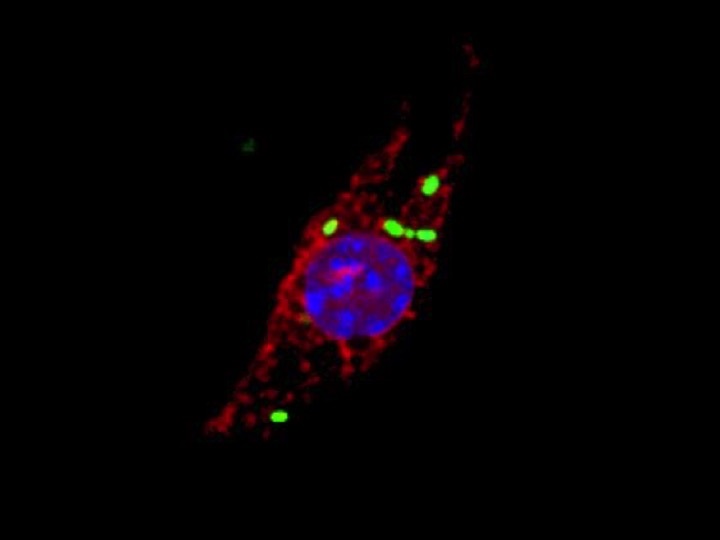
One of the unexpected findings of the study was that a well-known family of proteases called cathepsins move to a new location when the cell is infected by Salmonella. Cathepsins are normally kept inside the lysosomes, and they have previously been implicated in promoting cell death—although the mechanism or any link between the process and bacterial infection were unknown. The scientists have now discovered that Salmonella causes newly produced cathepsins to accumulate in the nuclei of infected cells. The protein-degrading activity of cathepsins in the nucleus is then required to initiate an inflammatory form of programmed cell death.
The new study shows the benefit of systematically following protein dynamics during infection, which can unravel new pathways and mechanisms that the host uses to defend itself against pathogens.
Image: When immune cells called macrophages get infected by the intracellular pathogen Salmonella enterica (shown in green), cellular proteins of the cathepsin family (red, indicating cathepsin activity) localize to the nucleus (blue).