Neural stem cells are widely understood to be responsible for early brain development, but they also remain active for an entire lifetime. They divide and continually generate new nerve cells and enable the brain to constantly adapt to new demands. However, there are various genetic mutations that impede neural stem cell activity, thus leading to learning and memory deficits in affected patients.
In a study published today in Cell Stem Cell, University of Zurich researchers demonstrate that a lipid metabolism enzyme regulates the lifelong activity of brain stem cells. This enzyme—known as fatty acid synthase (FASN)—is responsible for the formation of fatty acids. A specific mutation in the enzyme’s gene causes cognitive deficits.
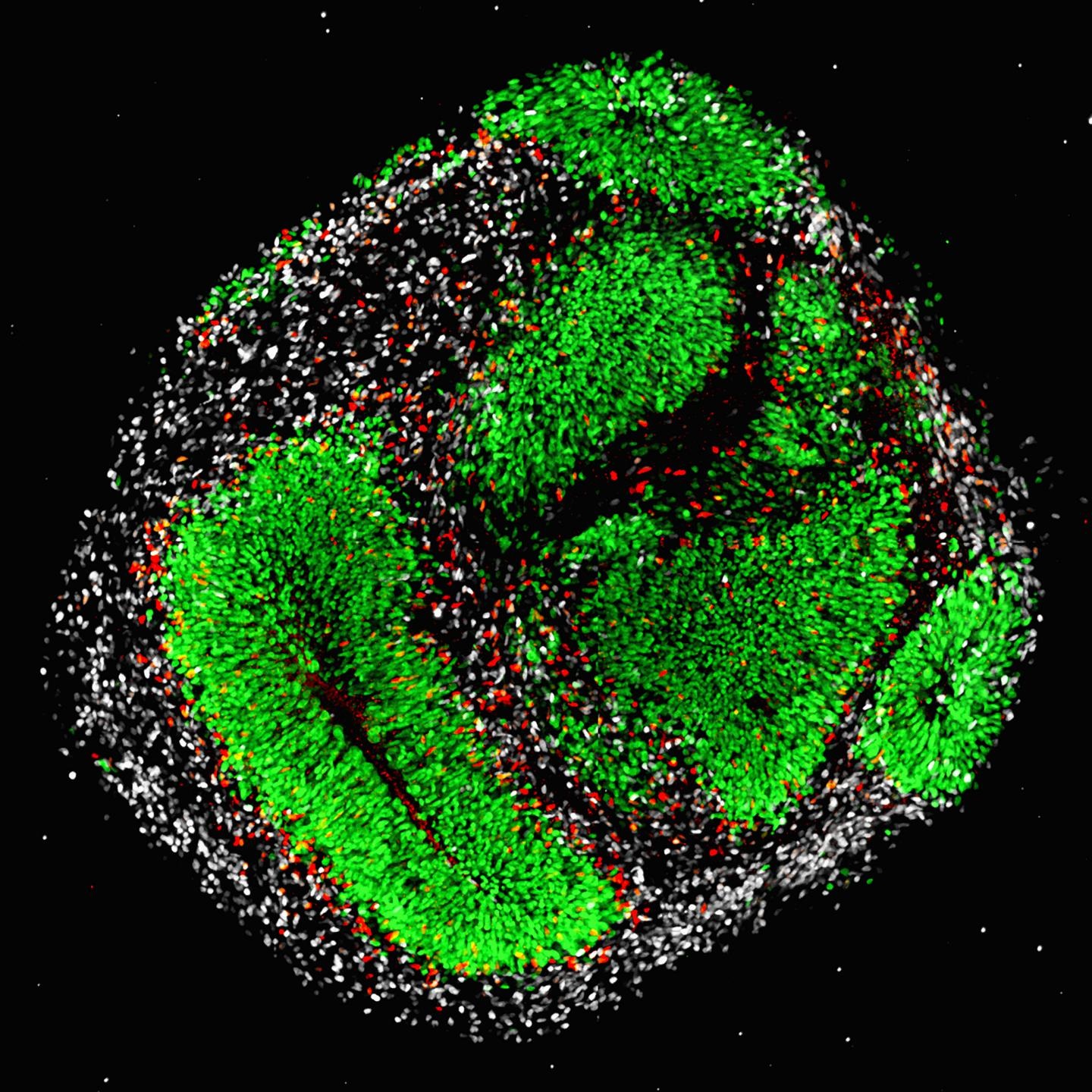
The researchers studied the FASN mutation in both mouse models and human cerebral organoids. “This approach allows us to analyze the effects of the defective enzyme in the brains of adult mice and during early human brain development in parallel,” says senior author Sebastian Jessberger.
Search Antibodies Search Now Use our Antibody Search Tool to find the right antibody for your research. Filter
by Type, Application, Reactivity, Host, Clonality, Conjugate/Tag, and Isotype.
The researchers found that, in their studies, the FASN mutation led to reduced division of stem cells both in mice and in human tissue. The hyperactivity of the mutated enzyme is responsible for this; since fats accumulate inside the cell, it puts the stem cells under stress and reduces their ability to divide. Similar to cognitive deficits found in affected people, mice also displayed learning and memory deficits due to the mutation.
“Our results provide evidence of the functional correlation between lipid metabolism, stem cell activity, and cognitive performance,” Jessberger says.
The newly identified mechanism shows how lipid metabolism regulates neuronal stem cell activity and thus influences brain development. According to the scientists, their methodology provides a “blueprint” for conducting detailed research into the activity of brain stem cells and their role in cognitive processes, which could lead to a better understanding of poorly understood diseases.
“In addition, we hope that it will be possible to control stem cell activity therapeutically to use them for brain repair—for example, for the future treatment of cognitive disorders or in association with diseases that involve the death of nerve cells, such as Parkinson’s disease or Alzheimer’s disease,” Jessberger says.
Image: With cerebral organoids produced by human embryonic stem cells, the early development of the human brain was investigated. The organ-like cell cultures consist of neural stem cells (green), progenitor cells (red) and nerve cells (white). Image courtesy of Daniel Gonzalez-Bohorquez, UZH.