Doctors have relentlessly impressed upon us the many benefits of exercise. Energy, mood, sleep, and motor skills all improve with a regular fitness regimen. However, the neurological changes underlying these benefits have been unclear. In a study published today in Nature Communications, UCSD researchers identified key neurological modifications that follow sustained exercise including neurotransmitter switching.
In the past, the team has led groundbreaking research on the ability of neurons to change their transmitter identity in response to sustained stimuli, typically leading to changes in behavior. After carrying out research that described neurotransmitter switching in depression, the team began to turn their attention to how such switching might be involved in healthy conditions.
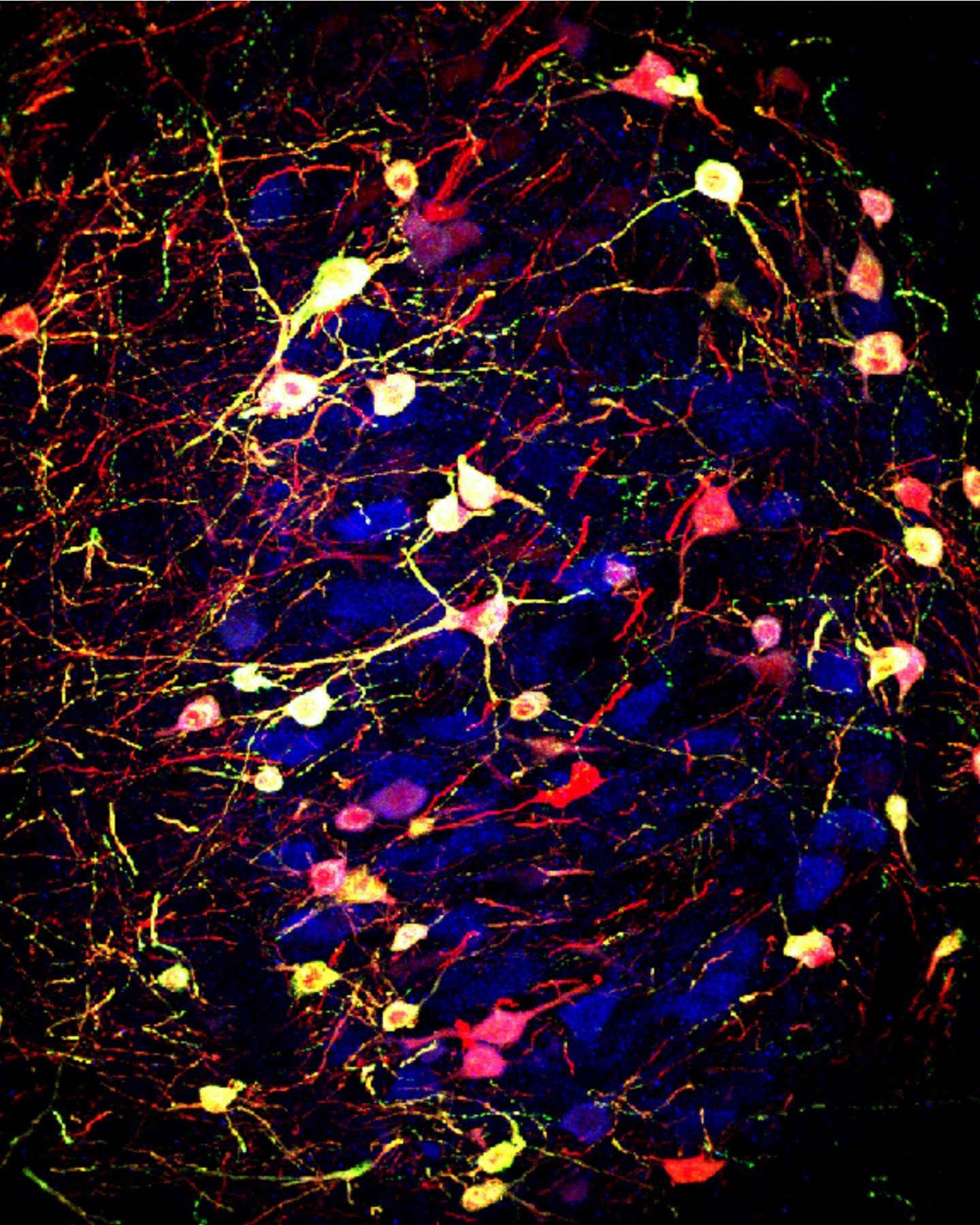
For their study, the team compared mice that completed a week’s worth of exercise on running wheels with mice that had no access to running wheels. They found that the exercised group acquired several demanding motor skills such as staying on a rotating rod or crossing a balance beam more rapidly than the non-exercised group. When the brains of the running mice were examined, the neurons in the brain region known as the caudal pedunculopontine nucleus (cPPN)—which regulate motor coordination—were discovered to have switched neurotransmitters from acetylcholine to GABA.
Search Antibodies Search Now Use our Antibody Search Tool to find the right antibody for your research. Filter
by Type, Application, Reactivity, Host, Clonality, Conjugate/Tag, and Isotype.
To confirm their findings, the researchers used molecular tools to block the newly identified transmitter switch resulting from exercise. They found that the enhancement of motor skill learning in these mice was prevented. Based on their findings, the researchers propose a new model in which conversion of cPPN excitatory cholinergic neurons to inhibitory GABAergic neurons provides feedback control regulating motor coordination and skill learning.
The researchers say the discovery could lead to further findings where neurotransmitter switching leads to key motor skill changes. The researchers say they’d like to test ideas such as whether neurotransmitters could be deliberately switched to benefit motor skills, even without exercise. They also plan to conduct research on whether exercise similarly triggers benefits of motor skill learning in those with neurological disorders.
“We suggest that neurotransmitter switching provides the basis by which sustained running benefits motor skill learning, presenting a target for clinical treatment of movement disorders,” the authors conclude in the paper.
Image: A group of midbrain neurons expressing acetylcholine (blue) are made to express another type of neurotransmitter, glutamate (yellow). Image courtesy of Spitzer Lab, UC San Diego.