An instrument currently aboard the International Space Station could grow E. coli bacteria in space, opening a new path to bio-manufacturing drugs during long-term space flights. Research published today in Nature Microgravity used an Earth-bound simulator of the space station instrument to grow E. coli, demonstrating that it can be nurtured with methods that promise to be more suitable for space travel than existing alternatives.
“If we can get microorganisms to grow well in space, astronauts can use them to make pharmaceuticals on demand. This could be vital for survival on long missions where resupplying is not an option,” says senior author Richard Bonocora of Rensselaer Polytechnic Institute.
With promising results, the team hopes to conduct a similar experiment aboard the space station. And while they’re starting with E. coli, the workhorse of molecular biology, the team hopes to eventually use the instrument to grow microorganisms with radiation resistance, which could protect developing pharmaceuticals from the ever-present radiation of space as they are produced.
Search Antibodies Search Now Use our Antibody Search Tool to find the right antibody for your research. Filter
by Type, Application, Reactivity, Host, Clonality, Conjugate/Tag, and Isotype.
Bacteria like E. coli need oxygen to grow, and the gold standard method for aerating bacteria in a liquid growth medium uses an orbital shaker, a machine that horizontally shakes a platform on which the vessels containing the liquid can be stowed. The shaker relies on the force of gravity to swirl the liquid contents, which rise and fall within a flask, mixing oxygen with the liquid.
But Bonocora and his research team believe an instrument sent to the space station in July 2019 could do a better job. The NASA-built instrument uses a syringe to dispense a drop of liquid, which forms a bubble. One side of the bubble adheres to a stationary ring, while the other side adheres to a thin ring that can rotate. The rotating ring creates shear force on the surface of the bubble, swirling its contents.
On Earth, Bonocora used a knife-edge viscometer at the surface of liquid in a dish to simulate the shearing force. The experiment tested how well bacteria grew when aerated by the knife-edge viscometer and an orbital shaker, with both instruments used at various speeds. At higher speeds, bacteria aerated by the knife-edge viscometer showed growth rates approaching that of the orbital shaker. Even at lower speeds, shear force produced significantly more growth than samples of bacteria that were not mechanically aerated.
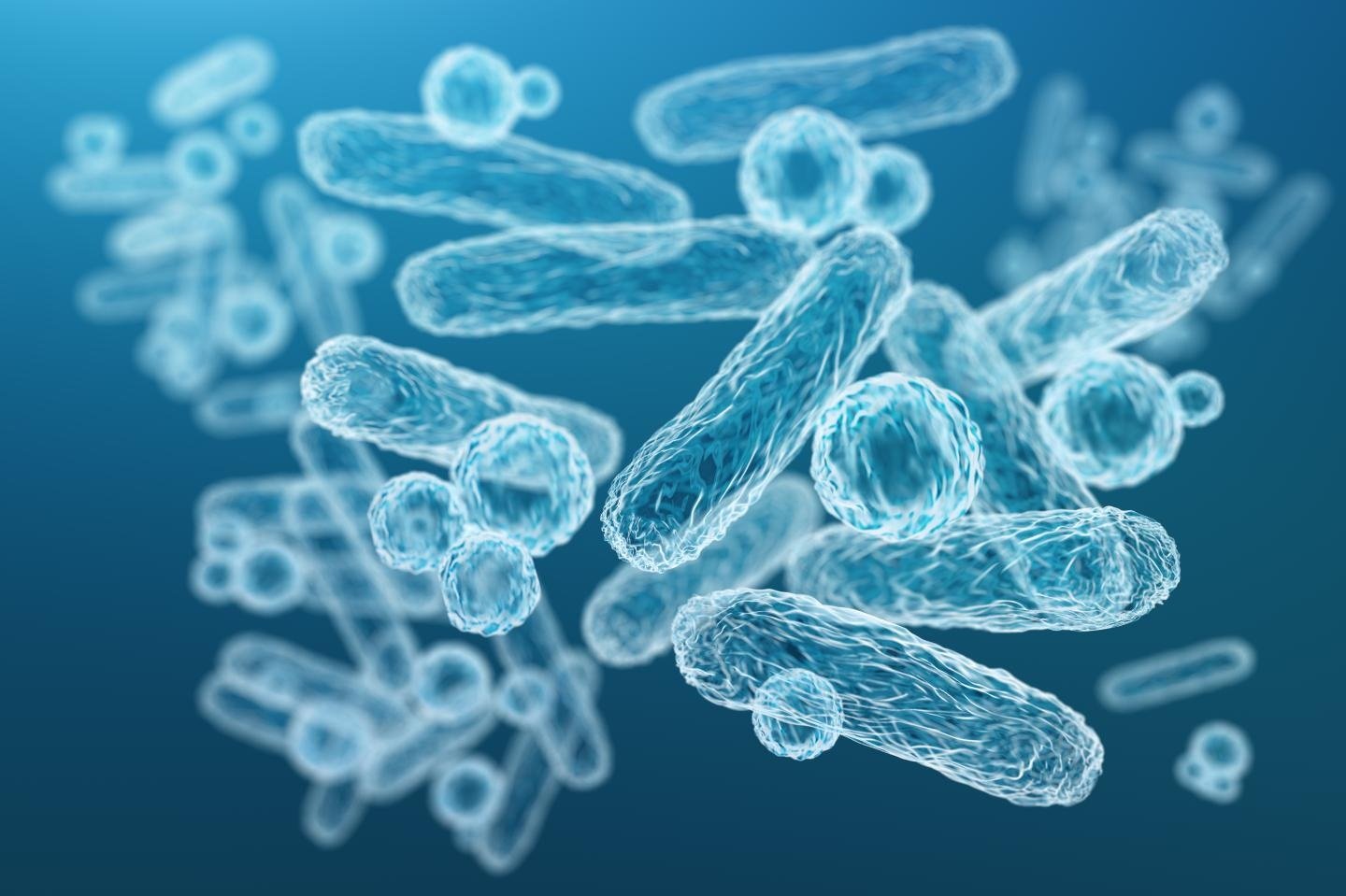
Image: New bacterial growth technique offers path for biomanufacturing pharmaceuticals during space flights. Image courtesy of Rensselaer Polytechnic Institute.