A new study published today in Nature Cell Biology revealed that, in order to metastasize, breast cancer cells shift their metabolic strategy. Instead of relying on glycolysis like primary cancer cells, they switch to mitochondrial metabolism. The new discovery could lead to better strategies for preventing metastasis, effectively reducing mortality in breast cancer patients.
“This has important potential clinical implications because it suggests that drugs targeting mitochondrial metabolism may have efficacy for preventing metastatic spread in patients,” says senior author Devon A. Lawson of UCI. “Historically, tumors were thought to contain dysfunctional mitochondria and be principally sustained by anaerobic glycolysis, or Warburg metabolism. Our work challenges that dogma and shows that breast cancer cells use mitochondrial metabolism during metastatic spread.”
Despite major advances in the detection and treatment of early-stage disease, breast cancer metastasis accounts for approximately 40,000 deaths among women in the U.S. each year. It is the number one cause of nearly all mortality associated with breast cancer.
Search Antibodies Search Now Use our Antibody Search Tool to find the right antibody for your research. Filter
by Type, Application, Reactivity, Host, Clonality, Conjugate/Tag, and Isotype.
Previous work suggests that metastasis is seeded by rare primary tumor cells with unique biological properties. These properties enable the cells to spread, allowing the cancer to take hold in other locations in the body. While properties promoting cell motility and migration have been well studied, mechanisms governing the seeding and establishment of small collections of cancer cells in distal tissues have not been. This is, in part, because metastatic seeding cannot be studied in humans, and because it is technically challenging to detect and analyze rare cells at this transient stage in animal models.
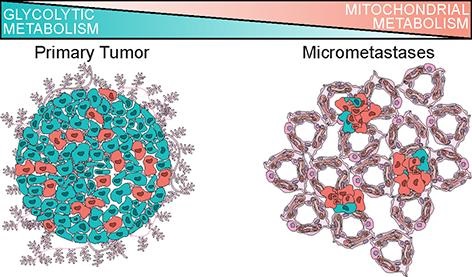 “Through our research, we established a robust new method for identifying global transcriptomic changes in rare metastatic cells during seeding using single-cell RNA-sequencing and patient-derived xenograft (PDX) models of breast cancer,” says first author Ryan Davis, also of UCI. “We found that metastatic cells harbor distinct RNA molecules that are highly predictive of poor survival in patients and alter metabolism in a way that can be targeted therapeutically.”
Image: By carrying out scRNAseq in patient-derived models of breast cancer, a UCI-led research team has identified metabolic adaptations that cancer cells acquire as they spread throughout the body. Above is an artistic rendering of the altered metabolism in micrometastatic cells in the lungs compared to primary tumors, opening a new potential avenue to target cancer cell spread in patients. Image courtesy of UCI School of Medicine.