In a study published today in Nature Communications, an international team of scientists discovered a new material that can be 3D printed to create tissue-like vascular structures.
“This work offers opportunities in biofabrication by enabling simultaneous top-down 3D bioprinting and bottom-up self-assembly of synthetic and biological components in an orderly manner from the nanoscale,” says senior author Alvaro Mata of the Queen Mary University of London. “Here, we are biofabricating micro-scale capillary-like fluidic structures that are compatible with cells, exhibit physiologically relevant properties, and have the capacity to withstand flow. This could enable the recreation of vasculature in the lab and have implications in the development of safer and more efficient drugs, meaning treatments could potentially reach patients much more quickly.”
Self-assembly is the process by which multiple components organize into larger well-defined structures. Biological systems rely on this process to assemble molecular building blocks into complex and functional materials exhibiting remarkable properties such as the capacity to grow, replicate, and perform robust functions.
Search Antibodies Search Now Use our Antibody Search Tool to find the right antibody for your research. Filter
by Type, Application, Reactivity, Host, Clonality, Conjugate/Tag, and Isotype.
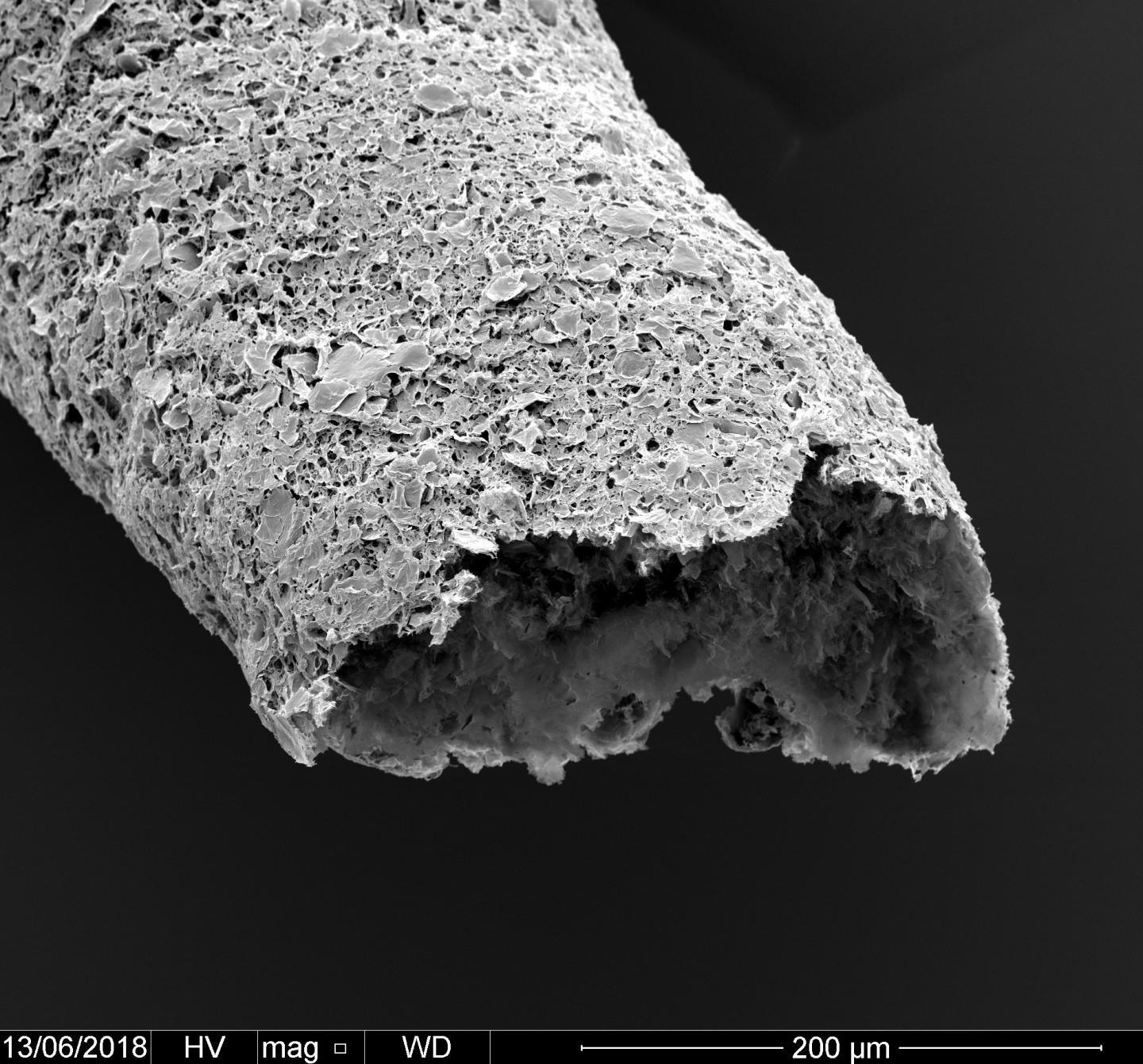
The new biomaterial is made by the self-assembly of a protein that contains graphene oxide. The flexible regions of this protein order themselves and conform to the graphene oxide, generating a strong interaction between them. By controlling the way in which the two components are mixed, it is possible to guide their assembly at multiple size scales into complex robust structures. The material can then be used as a 3D printing bioink to print structures with intricate geometries and resolutions.
 “There is a great interest to develop materials and fabrication processes that emulate those from nature,” says first author Yuanho Wu. “However, the ability to build robust functional materials and devices through the self-assembly of molecular components has until now been limited. This research introduces a new method to integrate proteins with graphene oxide by self-assembly in a way that can be easily integrated with additive manufacturing to easily fabricate biofluidic devices that allow us replicate key parts of human tissues and organs in the lab.”
Image: Close-up of a tubular structure made by simultaneous printing and self-assembling between graphene oxide and a protein. Image courtesy of Alvaro Mata.