When the brain suffers from CNS disease, neural stem and progenitor cells (NSPCs) can help repair the damage. NSPCs originate in the stem cell niche of the subventricular zone (SVZ), and the microenvironment within the SVZ helps to determine NSPC fate. However, after injury, these NSPCs tend to develop into astrocytes as opposed to neurons.
Astrocytes play a major role in the formation of scars. Therefore, they interfere with the regeneration of the nerves in the central nervous system. In a study published today in Nature Communications, University of Freiburg scientists have further defined the mechanisms behind this promotion of astrogenesis.
Following damage to the cerebral cortex of mice, the team found that fibrinogen from the blood is enriched in the stem cell niche of the SVZ. Fibrinogen is a blood coagulation factor and a precursor of the protein fibrin, which coats and stabilizes the blood platelets that gather at the site of a vascular injury.
Search Antibodies Search Now Use our Antibody Search Tool to find the right antibody for your research. Filter
by Type, Application, Reactivity, Host, Clonality, Conjugate/Tag, and Isotype.
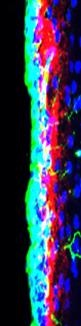
According to their research, fibrinogen also inhibits the neuronal differentiation of NSPCs. At the same time, the enriched fibrinogen leads to increased astrogenesis, as fibrinogen activates the BMP receptor signaling pathway. By experimentally reducing fibrinogen—for example, by adding the snake venom Ancrod—the astrocyte formation from NSPCs was blocked, which resulted in reduced scarring.
“The discovery that an important blood coagulation protein, fibrinogen, can induce an astrogenic milieu in the SVZ stem cell niche, which determines the contribution of NSPCs to repair mechanisms in CNS diseases, has potential implications for several processes in CNS diseases in different stem cell niches,” says senior author Christian Schachtrup.
With his research, Schachtrup hopes to contribute to making neuronal regeneration processes more treatable through drugs or cell replacement therapies.
Image: The blood-clotting protein fibrinogen (red) is deposited in the stem cell niche and regulates the contribution of stem cells (green) to repair mechanisms in central nervous system diseases. Image courtesy of Schachtrup lab / University of Freiburg.