The zebrafish is a master of regeneration. Unlike humans, zebrafish can reproduce brain cells lost due to injury or disease. However, the zebrafish is evolutionarily related to humans, and thus possesses the same brain cell types as humans. This leads to the question: Can a hidden regeneration potential also be activated in humans?
In a study published yesterday in Development, Dresden scientists determined the number and type of newly formed neurons in zebrafish—essentially conducting a “census” in their brains. Following an injury, zebrafish form new neurons in high numbers and integrate them into the nervous system, which is the reason for their amazing brain regeneration ability.
Search Antibodies Search Now Use our Antibody Search Tool to find the right antibody for your research. Filter
by Type, Application, Reactivity, Host, Clonality, Conjugate/Tag, and Isotype.
The researchers used adult transgenic zebrafish in whose forebrains they were able to identify the newborn neurons. The forebrain of the zebrafish is the equivalent to the human cerebral cortex, the largest and functionally most important part of the brain. The team investigated the newborn and mature neurons as well as brain stem cells using single-cell sequencing. Thus, they discovered specific markers for newborn neurons and were able to comprehensively analyze which types of neurons are newly formed in the adult brain of the zebrafish.
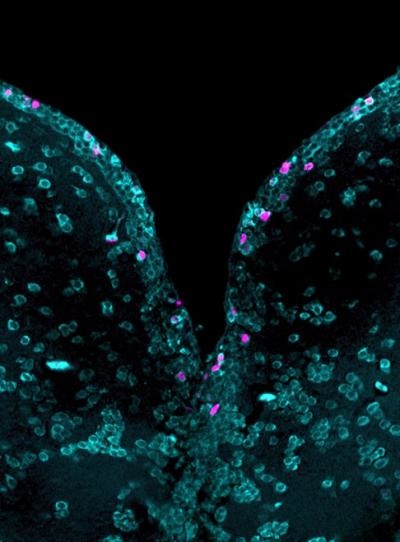
The scientists discovered two types of neurons that can be newly formed: Projection neurons, which create connections between brain areas, and internal neurons, which serve to fine-tune the activity of the projection neurons. The researchers also investigated the data obtained from brain cell sequencing of mice and found that zebrafish and mice have the same cell types. This also makes these results highly relevant for humans.
“On the basis of this study, we will further investigate the regeneration processes that take place in zebrafish. In particular, we will study the formation of new neurons after traumatic brain damage and their integration,” explains senior author Michael Brand. “We hope to gain insights that are relevant for possible therapies helping people after injuries and strokes or suffering from neurodegenerative diseases. We already know that a certain regenerative ability is also present in humans and we are working on awakening this potential. The results of our study are also important for understanding the conditions under which transplanted neurons can network with the existing ones and thus could let humans regain their former mental performance.”
Image: Newly formed neurons have a magenta-stained nucleus and are surrounded by turquoise cells. Image courtesy of Christian Lange.