Increasing abundance of plastic waste has alarmed the society, but the environmental fate of microplastics has been difficult to trace. A research group led by the University of Jyväskylä used carbon isotope labeling to follow the fate of polyethylene in the food chain. To the surprise of the researchers, plastic carbon was transformed into beneficial fatty acids—omega-3 and omega-6—by the microbes originating from humic lakes.
In the study, which was published end of December in Scientific Reports, the research team studied the biodegradation of polyethylene, which is one of the most used plastics. Polyethylene was labeled with 13C-isotope, which enables the most sensitive technology for studying the fate of slowly degrading materials.
“We analyzed produced gases and microbial fatty acids using stable isotope mass spectrometry,” says first author Sami Taipale. “We wanted to study whether microbes that have the ability to decompose complex humic compounds would also use recalcitrant microplastic polymers.”
Search Antibodies Search Now Use our Antibody Search Tool to find the right antibody for your research. Filter
by Type, Application, Reactivity, Host, Clonality, Conjugate/Tag, and Isotype.
Indeed, microplastic degradation was more pronounced by microbes originating from the humic lakes than by those originating from the clear water lakes.
“Fatty acids profiles also helped to identify the bacterial groups that were responsible for the decomposition,” says senior author Marja Tiirola. “The lack of labeled material limits the microplastic studies, so we welcome partners to synthesize other labeled plastic types.”
Showing direct utilization of polyethylene carbon and its upgrading in the upper food chain is a methodological breakthrough. The method was sensitive enough to show that microplastic carbon was incorporated into the essential fatty acids omega-3 and omega-6. Further into the study, these essential fatty acids supported the growth of and became integrated into the cell membranes of herbivorous zooplankton, the next level in the aquatic food chain.
Previous studies have suggested that high concentrations of microplastics can inhibit the growth of algae and zooplankton. However, this study showed that the growth inhibition observed in high polyethylene concentrations (30 mg L-1) was fully neutralized by microbial decomposers.
“The plastic surface was covered by microbes, which utilized released chemicals or prevented physical contact to algae and zooplankton,” says coauthor Jussi Kukkonen.
Since microbes can cease the potential toxicity of microplastics in aquatic environments, ecorealistic testing should be performed in the presence of natural microbiomes.
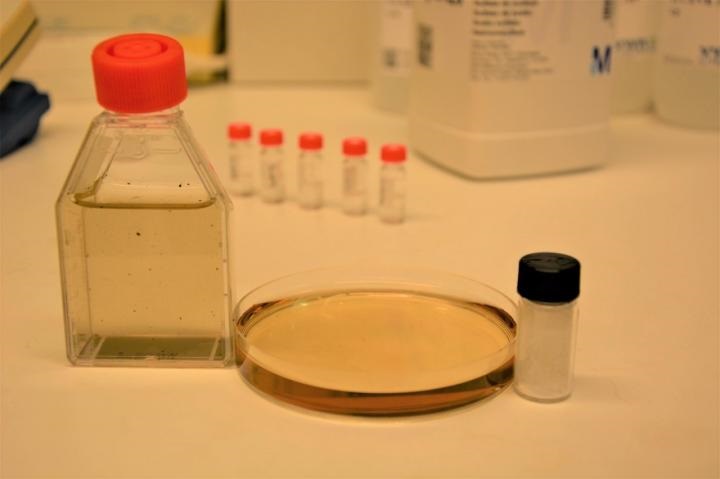
Image: Plastic carbon was transformed into the beneficial fatty acids omega-3 and omega-6 by the microbes originating from humic lakes. Image courtesy of The University of Jyväskylä.