By leveraging machine learning, a new computational tool is able to infer the RNA-binding properties of proteins. According to KAUST scientists, the software, called NucleicNet, outperforms other algorithmic models of its kind and provides additional biological insights that could aid in drug design and development.
"Our structure-based computational framework can reveal the detailed RNA-binding properties of these proteins, which is important for characterizing the pathology of many diseases," says Jordy Homing Lam, co-first author of the study.
The team taught NucleicNet to automatically learn the structural features that underpin interactions between proteins and RNA. They trained the algorithm using three-dimensional structural data from 158 different protein-RNA complexes available on a public database. Pitting NucleicNet against other predictive models—all of which rely on sequence inputs rather than structural information—the KAUST team showed that the tool could most accurately detect which sites on a protein surface bound to RNA molecules or not.
Search Antibodies Search Now Use our Antibody Search Tool to find the right antibody for your research. Filter
by Type, Application, Reactivity, Host, Clonality, Conjugate/Tag, and Isotype.
What's more, unlike any other model, NucleicNet could predict which aspects of the RNA molecule were doing the binding, be it part of the sugar-phosphate backbone or one of the four letters of the genetic alphabet.
In collaboration with researchers in China and the United States, the team validated their algorithm on a diverse set of RNA-binding proteins, including proteins implicated in gum cancer and amyotrophic lateral sclerosis, to show that the interactions deduced by NucleicNet closely matched those revealed by experimental techniques. They reported the findings in Nature Communications today.
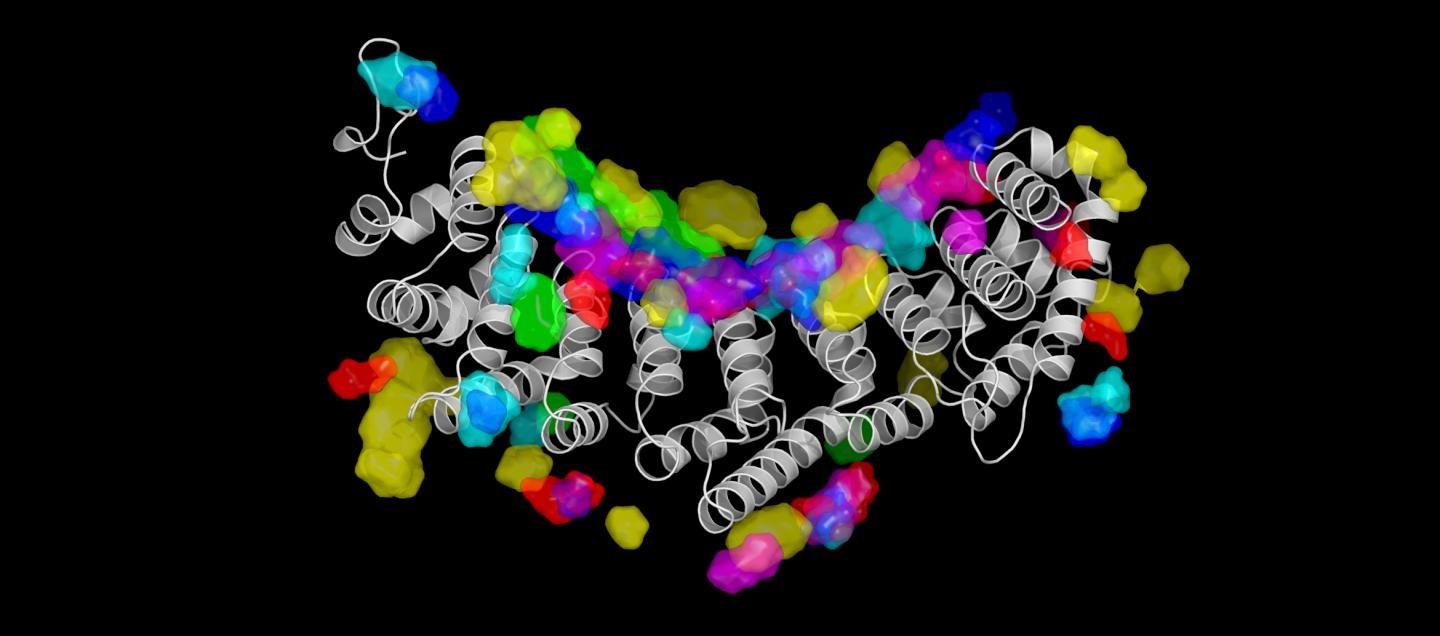
NucleicNet is openly available for researchers who want to predict RNA-binding sites and binding preference for any protein of interest. The software can be accessed here.
Image: The RNA interaction surface of Fem-3-binding-factor 2 as predicted by NucleicNet. Image courtesy of KAUST.