Some types of bacteria have the ability to kill other cells by punching holes into them. They do this by releasing specialized proteins called pore-forming toxins (PFTs) that latch onto the cell’s membrane and form a tube-like channel through it. Once a target cell has been punctured by multiple PFTs, it self-destructs.
When a biomolecule passes through one of these nanopores, its components give out distinct electrical signals. Thus, PFTs can be used to sense biomolecules like peptides and nucleic acids. Nanopore sensing is already on the market as a major tool for DNA and RNA sequencing; and in a study published today in Nature Communications, EPFL scientists investigated a PFT called aerolysin that can be used for more complex sensing, like protein sequencing.
Aerolysin forms very narrow pores that can distinguish molecules with much higher resolution than other toxins. Previous studies have shown that aerolysin can be used to “sense” several biomolecules, but there haven’t been many studies on the relationship between aerolysin’s structure and its molecular sensing abilities.
Search Antibodies Search Now Use our Antibody Search Tool to find the right antibody for your research. Filter
by Type, Application, Reactivity, Host, Clonality, Conjugate/Tag, and Isotype.
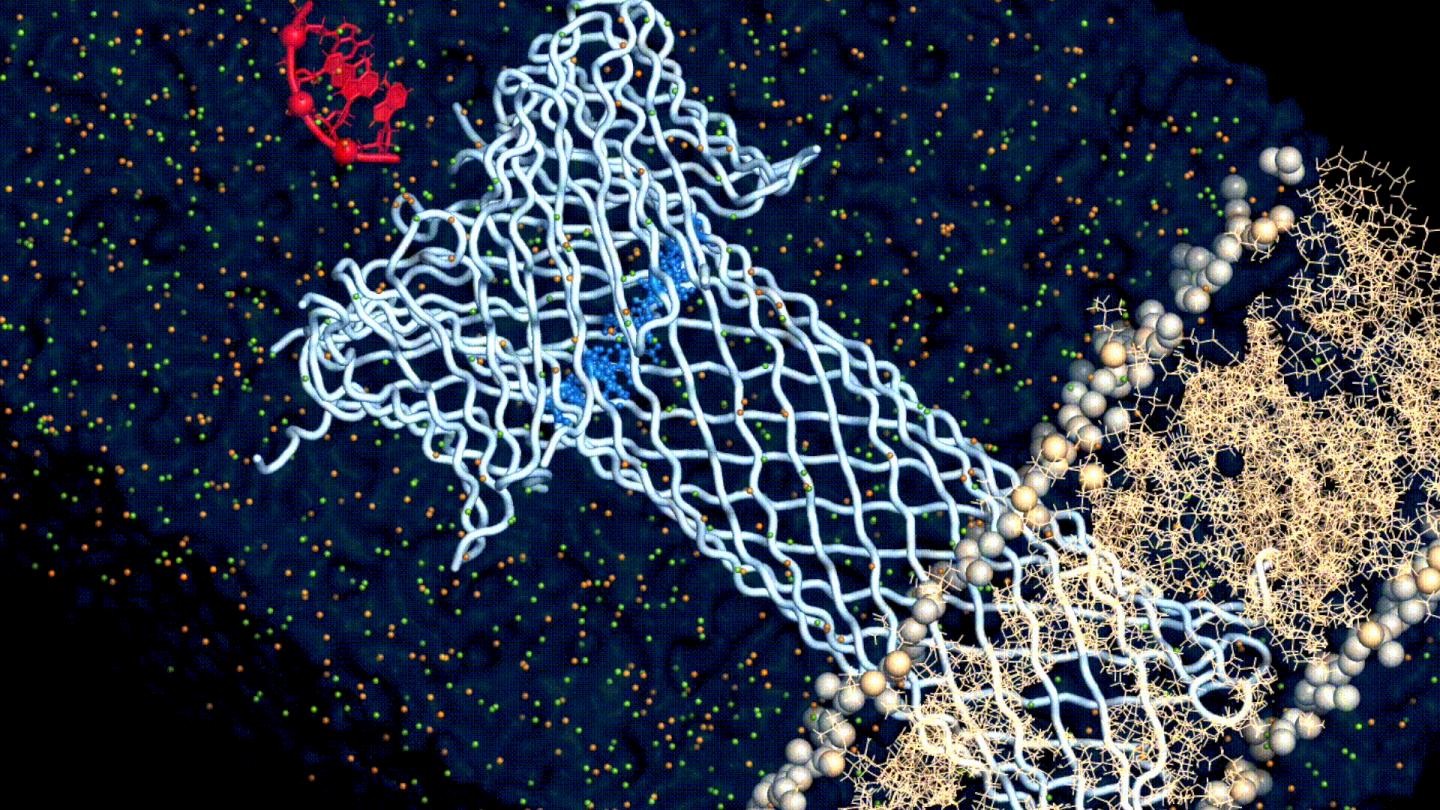
The researchers first used a structural model of aerolysin to study its structure with computer simulations. They first looked into how aerolysin’s amino acids affect its function in general, and then they strategically changed different amino acids in the computer model. The model then predicted the impact of each change on the overall function of aerolysin.
Next, the team produced sixteen genetically engineered aerolysin pores, embedded them in lipid bilayers to simulate their position in a cell membrane, and carried out various measurements to understand how ionic conductance, ion selectivity, and translocation properties of the aerolysin pore are regulated on a molecular level. With this approach, the researchers finally found what drives the relationship between the structure and the function of aerolysin: its cap.
“By understanding the details of how the structure of the aerolysin pore connects to its function, we can now engineer custom pores for various sensing applications,” says senior author Matteo Dal Peraro. “These would open new, unexplored opportunities to sequence biomolecules as DNA, proteins and their post-translational modifications with promising applications in gene sequencing and biomarkers detection for diagnostics.”
The scientists have already filed a patent for their sequencing and characterization of the genetically engineered aerolysin pores.
Image: Molecular simulation of an engineered aerolysin pore (light blue color) embedded into a membrane bilayer (cream color) and translocating DNA (red color). Image courtesy of Chan Cao, EPFL.