Telomeres are protective caps at the ends of chromosomes that become shorter with each cell division. If they become so short that the genes they protect could be damaged, the cell stops dividing and renewing. Consequently, the cell is increasingly unable to perform its functions.
Telomere length is therefore regarded as a marker for the biological age of a person (in contrast to their chronological age). For two people of the same chronological age, the person with shorter telomeres has an increased risk of developing age-related diseases and of a shorter life expectancy. So, how do we slow down, stop, or even reverse the shortening of telomeres?
Recent studies suggest that telomeres can change faster than previously thought—possibly taking just one to six months of mental or physical training to elongate. The exciting premise is that telomere lengthening may represent a reversal of the biological aging processes. However, it remains unclear if telomere elongation actually reflects any improvement in a person’s overall health and aging trajectory.
Search Antibodies Search Now Use our Antibody Search Tool to find the right antibody for your research. Filter
by Type, Application, Reactivity, Host, Clonality, Conjugate/Tag, and Isotype.
“To explore whether a short-term change in telomere length, after only a few months, might actually be associated with changes in a person’s biological age, we linked it to another biomarker of aging and health: brain structure,” says first author Lara Puhlmann of the Leipzig Max Planck Institute.
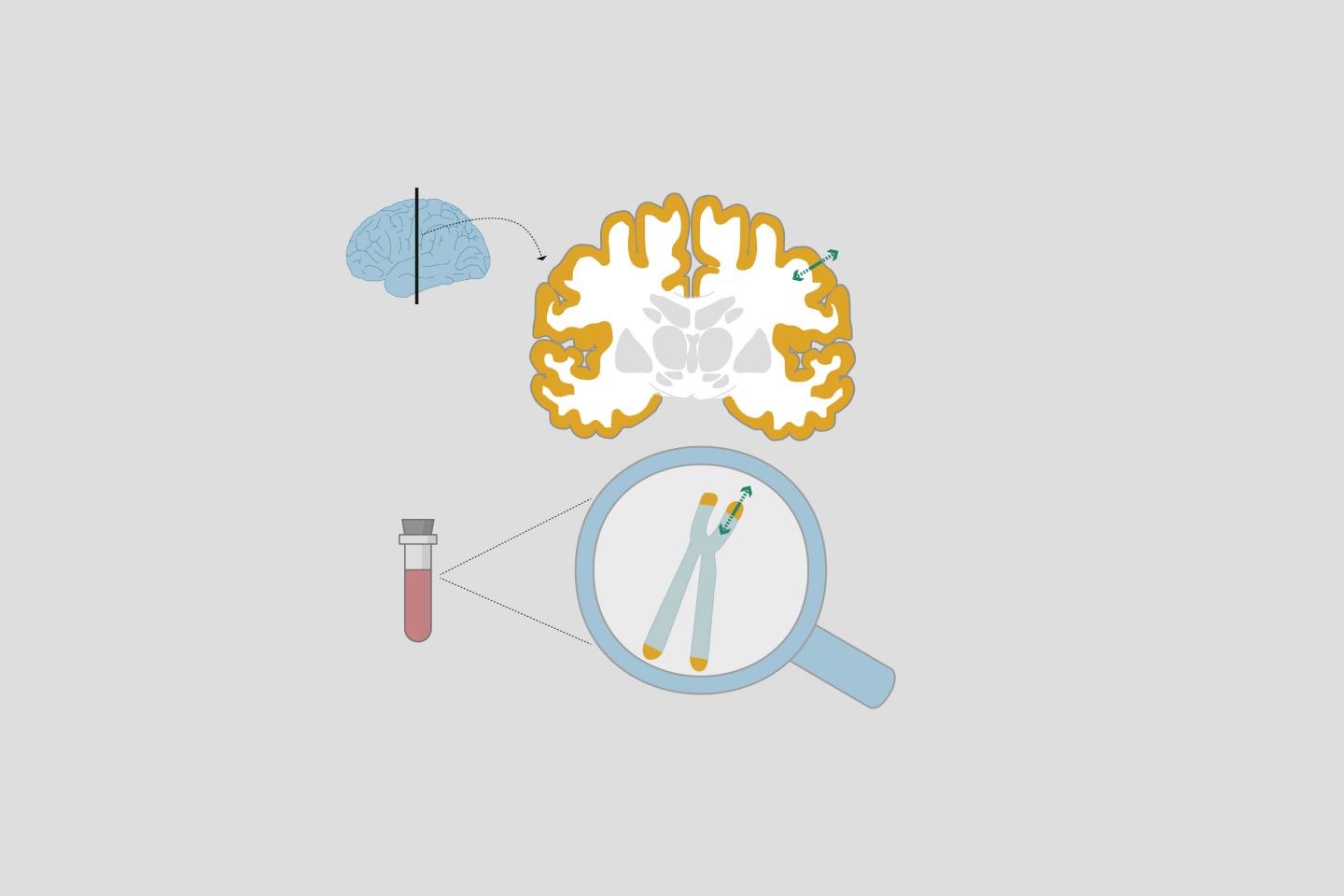
In a new study published Wednesday in JAMA Network Open, participants underwent four MRI examinations, each spaced three months apart, and provided blood samples on the same dates. Using the DNA of leukocytes from the blood, the scientists were able to determine telomere length using a polymerase chain reaction. The MRI scans were used to calculate the thickness of the cerebral cortex of each participant.
“Across systems, our biological aging appears to change more quickly than we thought,” Puhlmann says. “Indices of aging can vary together significantly in just three months.”
In periods during which participants’ telomeres lengthened, it was likely that their cortex had thickened at the same time. On the other hand, telomere shortening was associated with reductions of grey matter. This association occurred specifically in a brain region called the precuneus, which is a central metabolic and connectional hub.
The above results suggest that even short-term changes in telomere length over just three months might reflect general fluctuations in the body’s health and aging status. Many other questions, however, remain open. “We do not know, for example, which biological mechanism underlies the short-term changes in telomere length,” Puhlmann explains, “or whether the short-term changes really have a longer-term effect on health.”
Image: To determine the role of telomere length on brain structure, scientists measured their length with the DNA of leukocytes from the blood using a polymerase chain reaction. Additionally, they calculated the thickness of the cerebral cortex with MRI scans of study participants. Image courtesy of MPI CBS.