New research suggests that some cancer cells survive chemotherapy by eating their neighboring tumor cells. The study, published today in the Journal of Cell Biology, suggests that this act of cannibalism provides these cancer cells with the energy they need to stay alive and initiate tumor relapse after the course of treatment is completed.
Chemotherapy drugs such as doxorubicin kill cancer cells by damaging their DNA, but cells that survive initial treatment can soon give rise to relapsed tumors. This is a particular problem in breast cancers that retain a normal copy of the TP53 gene. Instead of dying in response to chemotherapy-induced DNA damage, these cancer cells generally just stop proliferating and enter senescence. In addition to surviving chemotherapy, these senescent cancer cells produce large amounts of inflammatory molecules and other factors that can promote the tumor's regrowth.
"Understanding the properties of these senescent cancer cells that allow their survival after chemotherapy treatment is extremely important," says first author Crystal A. Tonnessen-Murray from from Tulane University School of Medicine.
Search Antibodies Search Now Use our Antibody Search Tool to find the right antibody for your research. Filter
by Type, Application, Reactivity, Host, Clonality, Conjugate/Tag, and Isotype.
In the new study, Tonnessen-Murray and colleagues discovered that, after exposure to doxorubicin or other chemotherapy drugs, breast cancer cells that become senescent frequently engulf neighboring cancer cells. The researchers observed this surprising behavior not only in cancer cells grown in the lab, but also in tumors growing in mice. Lung and bone cancer cells are also capable of engulfing their neighbors after becoming senescent, the researchers discovered.
Tonnessen-Murray and colleagues found that senescent cancer cells activate a group of genes that are normally active in white blood cells that engulf invading microbes or cellular debris. After "eating" their neighbors, senescent cancer cells digested them by delivering them to lysosomes, acidic cellular structures that are also highly active in senescent cells.
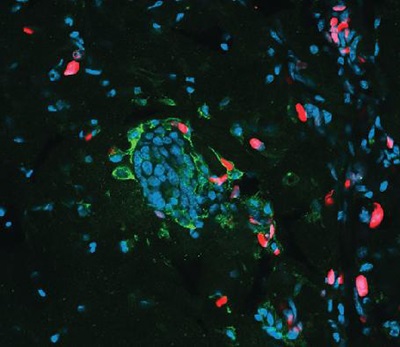
Importantly, the researchers determined that this process helps senescent cancer cells stay alive. Senescent cancer cells that engulfed a neighboring cell survived in culture for longer than senescent cancer cells that didn't. The researchers suspect that consuming their neighbors may provide senescent cancer cells with the energy and materials they need to survive and produce the factors that drive tumor relapse.
Image: A breast tumor formed in mice and treated with the chemotherapy drug doxorubicin shows that some cancer cells (red nuclei) have been engulfed by other cancer cells (green cell membrane). Image courtesy of Tonnessen-Murray et al., 2019.