In a study published today in Nature Immunology, scientists describe a previously unknown complication of primary immunodeficiency. In a distinct subset of immune cells from patients with primary immunodeficiency, cellular respiration is significantly increased. The overactivity of this cellular metabolism leads to inflammation.
The immune system protects us from infections and tumors—a challenging task, not least of all because the immune system must avoid harming the body’s own healthy tissue at the same time. However, rare genetic diseases lead to defects in the immune system known as primary immunodeficiency disorders (PID). One consequence of such disorders is susceptibility to infections, yet certain tumors and non-infectious inflammation (autoimmune diseases) can also occur more frequently.
Search Antibodies Search Now Use our Antibody Search Tool to find the right antibody for your research. Filter
by Type, Application, Reactivity, Host, Clonality, Conjugate/Tag, and Isotype.
In the current study, the researchers tested the hypothesis that the metabolic activity in the immune cells of PID patients can serve as a biomarker. They based this on the fact that cellular metabolism is a key regulator of the functioning of immune cells. In the immune cells of a subset of the examined PID patients, a key metabolic process—cellular respiration—was indeed significantly increased.
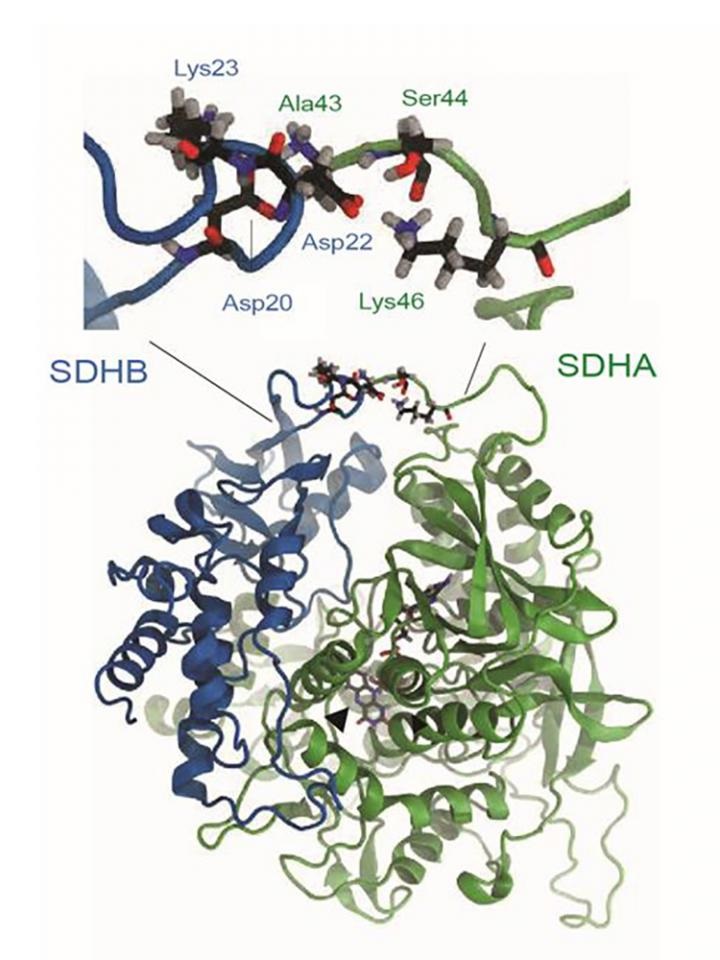
Based on this discovery, the researchers were able to decode a new kind of disease mechanism. The increased cellular respiration was triggered by the hyperactivity of a protein in the respiratory chain. This then signaled the cells to produce inflammatory mediators. With these findings, the researchers were able to successfully administer a targeted treatment approved for another indication.
“It is an example of how patient-based research can help to decode disease-causing molecular processes,” says senior author Christoph Hess of the University of Basel and University Hospital of Basel. “This benefits patients, who may receive more targeted and effective medication with fewer side effects. Further, insights into fundamental biological processes gained from studying rare diseases can also enable new pathophysiological considerations relating to more common diseases.”
Image: A typical interaction between the A45T mutated SDHA gene (green) and the SDHB gene (blue)—it increases the functioning of the whole complex and thereby triggers inflammation signals in the affected immune cells. Image courtesy of DBM.