A paper published today in eLife describes a new tool called retina-on-a-chip, which combines living human cells with an artificial tissue-like system. This cutting-edge tool may provide a useful alternative to existing models for studying eye disease and for testing the effects of drugs on the retina.
Scientists often rely on animals or retina organoids—tiny retina-like structures grown from human stem cells—to study eye diseases and drug side effects. But results from studies in both models often fail to describe these issues accurately in humans. As a result, a team of scientists have tried to recreate a retina for testing purposes using engineering techniques.
“It is extremely challenging, if not almost impossible, to recapitulate the complex tissue architecture of the human retina solely using engineering approaches,” explains co–first author Christopher Probst of the Fraunhofer Institute for Interfacial Engineering and Biotechnology in Stuttgart, Germany.
Search Antibodies Search Now Use our Antibody Search Tool to find the right antibody for your research. Filter
by Type, Application, Reactivity, Host, Clonality, Conjugate/Tag, and Isotype.
To overcome these challenges, the scientists coaxed human pluripotent stem cells to develop into several different types of retina cells on artificial tissue. This tissue recreates the environment that cells would experience in the body and delivers nutrients and drugs to the cells through a system that mimics human blood vessels.
“This combination of approaches enabled us to successfully create a complex multi-layer structure that includes all cell types and layers present in retinal organoids, connected to a retinal pigment epithelium layer,” says co–first author Kevin Achberger of the Eberhard Karls University of Tübingen, Germany. “It is the first demonstration of a 3D retinal model that recreates many of the structural characteristics of the human retina and behaves in a similar way.”
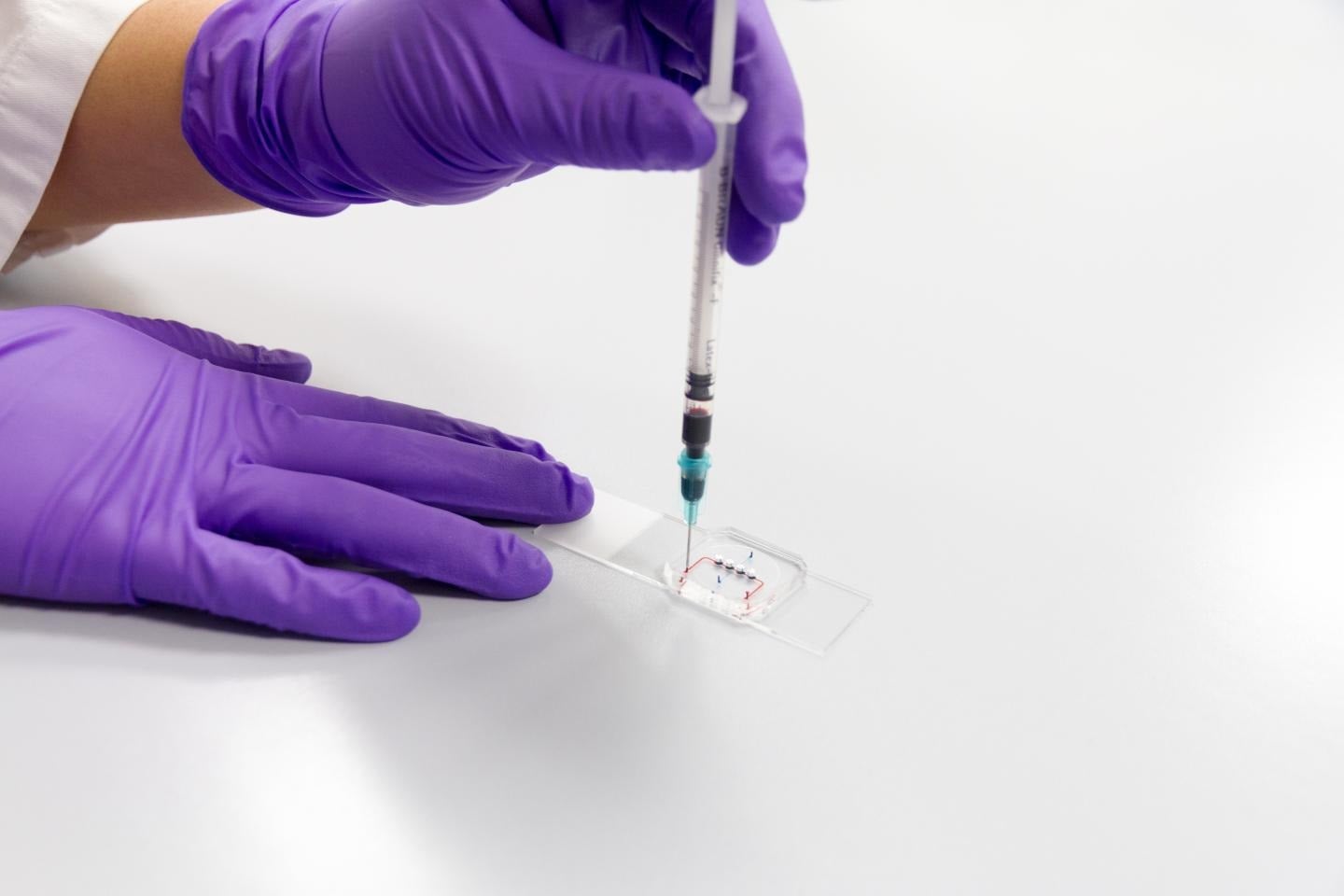
The team treated their retina-on-a-chip with the anti-malaria drug chloroquine and the antibiotic gentamicin, which are toxic to the retina. The drugs also had a toxic effect on the retinal cells in the model, suggesting that the model could be used to test for harmful drug effects.
“One advantage of this tiny model is that it could be used as part of an automated system to test hundreds of drugs for harmful effects on the retina very quickly,” Achberger says. “Also, it may enable scientists to take stem cells from a specific patient and study both the disease and potential treatments in that individual’s own cells.”
Image: This is the retina-on-a-chip technology. Image courtesy of Fraunhofer IGB.