Using high-resolution mass spectrometry and chemoinformatics, Russian scientists identified biologically active components in humic substances extracted from peat and coal that have antiviral activity against the tick-borne encephalitis virus.
Natural multicomponent mixtures, such as humic substances found in soil, peat, and coal, are a very important source of biologically active compounds. However, finding a specific compound in these environments is a highly challenging task that requires advanced methods capable of differentiating and separating one substance from another.
"We made an attempt at understanding the structural reasons behind the antiviral activity of the molecular components of humic substances. Aware that standard methods of complex mixture separation do not work for humic substances, we looked at some known structures matching the molecular compositions determinable by mass spectrometry and noticed that some structures correspond to compounds often extracted from natural sources, for example, flavonoids. We undertook further mass spectrometry experiments, which suggest that there can indeed be a match between the types of structures we found in the databases and the molecular components of humic systems," explained Alexander Zherebker, Ph.D., one of the authors of the Scientific Reports paper published today.
Search Antibodies Search Now Use our Antibody Search Tool to find the right antibody for your research. Filter
by Type, Application, Reactivity, Host, Clonality, Conjugate/Tag, and Isotype.
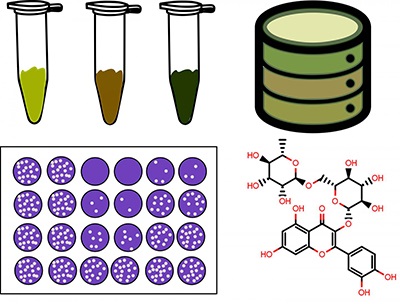 Image: Antiviral activity of ten humic substance (HS) samples was assessed against tick-borne encephalitis virus reproduction. To reveal possible active components of HS samples, FTICR MS data were searched in ChEMBL database. Several structures possessing similar antiviral activity profile and matching isotopic exchange results were identified. Image courtesy of Orlov A.A.